Stream of consciousness is usually taught as a technique — a clever trick for putting thought on the page. That gets it backwards. It was not a technique but a crisis of faith. For a hundred years the novel had been narrated by an all-knowing voice that hovered above its characters like a god, reading every heart and weighing every soul. By 1920, almost nobody believed in that vantage point anymore — not in fiction, not in religion, not in physics, not in the self. Stream of consciousness is what the novel did when the all-seeing narrator died: it gave up the god’s-eye view of the world and dove, for the first time, into the unedited weather of a single human mind.
The narrator who knew everything
To feel how radical the change was, you have to remember what it replaced. The great nineteenth-century novel was narrated by a voice of almost divine authority. Think of the narrator of George Eliot’s Middlemarch, who can enter the mind of a vain young doctor and a disappointed scholar and a self-deceiving banker in the same chapter, and who pauses, above them all, to tell you exactly what each one’s self-deception means. Think of Tolstoy, who moves through a ballroom reading the secret vanity of every dancer, or of Jane Austen, whose ironic narrator always knows more than her heroine and trusts you to catch the gap.
This narrator was a kind of secular providence. He — or it — could see into any consciousness, knew the moral significance of every act, and dispensed judgment with serene confidence. And that confidence rested on something the Victorians could still take for granted: the belief that human life had a knowable order, that a sufficiently wise observer could stand outside it and see the whole shape of a destiny. The omniscient narrator was the literary form of a culture that still believed the universe made sense and that someone, somewhere, could see it whole.
What broke
Then, in the space of a few decades, that confidence shattered, and it shattered everywhere at once. Darwin had already removed humanity from the center of creation. Nietzsche announced that God was dead, and meant by it that the shared source of moral certainty was gone. Freud delivered the most intimate blow of all: the self was not even transparent to itself; beneath the reasoning mind ran a dark river of drives and repressions that the conscious person could not see. Einstein unmade absolute space and time, so that there was no longer any privileged point from which to view events. And then the First World War took the grand nineteenth-century words — honor, glory, progress, civilization — and drowned them in the mud of the Somme.
For the novel, the consequence was specific and devastating. If the self is fragmentary and opaque even to itself, if there is no God’s-eye view and no shared moral order to appeal to, then the all-knowing narrator is no longer a convention — he is a lie. To go on writing as though a wise voice could survey a human life from above and pronounce its meaning was to pretend the catastrophe hadn’t happened. The honest writers understood that the form itself had to change. This is the deepest meaning of literary modernism, and it is the subject of our broader guide to modernism and where to start with it: not a fashion in difficulty, but the search for a way to tell the truth once the old certainties were gone.
What stream of consciousness actually is — and isn’t
“Stream of consciousness” is a phrase borrowed from psychology — the philosopher William James coined it in 1890 to describe the ceaseless, unbroken flow of thought, which does not move in tidy sentences but in a current of perceptions, memories, and half-formed feelings. Novelists took the idea and made it a method, and it is worth being precise about what that method involves, because the phrase is often used loosely.
At its mildest, it is free indirect discourse — the narration bending to borrow a character’s idiom and rhythm, so that we seem to hear thought without quotation marks. Austen already did this a century earlier; the modernists simply turned up its intensity until the narrator nearly vanished. At its more radical, it is interior monologue — the direct transcription of a character’s unspoken words as they occur, ungoverned by any explaining voice. And at its furthest reach it becomes something harder to name: the attempt to render not just the words a mind speaks to itself but the whole pre-verbal flicker of consciousness — sensation, association, the half-thought that dissolves before it finishes. The point was never chaos for its own sake. It was fidelity: an attempt to be more truthful about what the inside of a mind is actually like than the orderly omniscient narrator had ever allowed.
Where it came from
The inward turn did not arrive from nowhere; it had philosophical midwives. The most important was the French thinker Henri Bergson, whose distinction between clock time and durée — lived, felt duration, in which past and present interpenetrate rather than lining up like beads on a string — gave the modernists a way to conceive of consciousness as a flow rather than a sequence. If time is not a row of identical instants but a swelling, overlapping stream, then a novel faithful to experience could no longer march in orderly chapters; it had to move the way duration moves. Add to Bergson the shock of Freud, who insisted that the most important contents of a mind are precisely the ones it cannot see, and you have the intellectual weather in which the new fiction grew.
There were literary forerunners too, and it is worth rescuing two of them from the long shadow of Joyce and Woolf. The Frenchman Édouard Dujardin had written an entire short novel, Les Lauriers sont coupés (1887), in unbroken interior monologue — and Joyce, with rare generosity, credited him as the source of the method he would make famous. And in England, Dorothy Richardson began her vast novel-sequence Pilgrimage in 1915, rendering the consciousness of a single woman with a patience and thoroughness no one had attempted before. She arguably arrived first, ahead of both Joyce and Woolf; that her name is so rarely spoken beside theirs is one of the quiet injustices of literary history. The revolution had many parents, and not all of them were given their due.
Virginia Woolf and the luminous halo
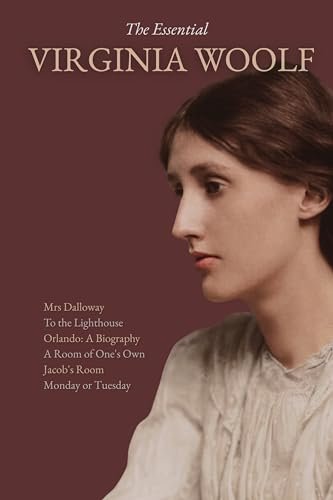
No one understood the stakes more clearly than Virginia Woolf, who turned the whole question into a manifesto. The realist novelists of her day, she complained, had it exactly backwards: they catalogued a character’s house, income, clothes, and furniture — the outside of a person — and called it character. But life, Woolf wrote, is not “a series of gig-lamps symmetrically arranged.” It is “a luminous halo, a semi-transparent envelope surrounding us from the beginning of consciousness to the end.” The real human being lives inside, in a perpetual shower of impressions; and a novel that wanted to be truthful would have to get in there.
So she dissolved the hard shell of conventional storytelling. In Mrs Dalloway a single June day in London becomes vast because we live it from inside several minds at once, the narration gliding from Clarissa Dalloway to a stranger on the street to the shell-shocked veteran Septimus Smith — Clarissa’s secret double, the one who carries the war’s madness she has managed to keep at bay. There is no omniscient judge arranging these lives into a lesson; there is only the movement of consciousness itself, binding strangers together by the accidents of a shared morning.
And in To the Lighthouse Woolf performs the most astonishing act of the whole movement. In the middle section, “Time Passes,” an entire decade — and a war, and the deaths of major characters — sweeps by in a few luminous pages, while an empty house slowly decays. The deaths themselves are reported in brackets, parenthetically, almost in passing: a whole human life dispatched in a subordinate clause, because that is how death feels from inside a continuing world. It is the omniscient narrator’s authority turned inside out — meaning is no longer pronounced from above; it leaks in at the edges of attention, where we actually live.
James Joyce and the maximal mind
If Woolf is the movement’s poet, James Joyce is its emperor — the one who pushed the inner turn to its absolute limit. He began quietly. The stories of Dubliners look like ordinary realism until you notice that each builds, with the precision of a poem, toward an “epiphany” — a sudden, silent moment in which a whole life reveals its truth. Already there the method is forming: meaning is not delivered by a narrator but flares up inside a consciousness, and inside the reader’s, at once.
Then came Ulysses, the encyclopedic extreme. Joyce takes one utterly ordinary day in the life of one utterly ordinary man — Leopold Bloom, a middle-aged advertising canvasser wandering Dublin — and gives the inner life of that nobody the scale and dignity once reserved for Homer’s kings. We are inside Bloom’s mind as it drifts across grief and lust and half-remembered science and tenderness for his dead son, and Joyce withholds nothing, because the wager of the book is that an ordinary mind, fully rendered, contains everything. The novel ends with the most famous passage in modernist fiction: Molly Bloom’s long, unpunctuated night-flow of memory and desire, a consciousness with the brakes off, ending — after all the day’s paralysis and disappointment — on the word “yes.” It is the body and the world themselves saying yes, with no narrator left to comment, because none is needed.
Time, memory, and the madeleine
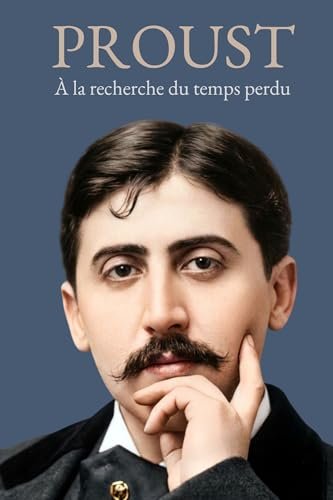
Stream of consciousness had a twin, and the two were never really separable: the modernist revolution in how novels handle time. If the new fiction lived inside a mind, it had to obey the mind’s strange chronology, in which a smell can collapse twenty years in an instant and a single afternoon can swell to fill a hundred pages. The supreme monument to this is Marcel Proust’s In Search of Lost Time, whose narrator, tasting a madeleine dipped in tea, is suddenly and involuntarily returned to the whole of his childhood — the past not merely recalled but relived, resurrected entire by an accident of sensation.
Proust’s insight was that consciousness is not so much a thing that exists in time as a thing made of time — built out of memory, and ambushed continually by a past that refuses to stay past. This is why the great modernist novels feel so unlike their orderly predecessors. The nineteenth-century narrator told a life as a sequence: first this happened, then that, and here is what it meant. The modernist novel renders a life as the mind actually holds it — all at once, layered, the present transparent to a dozen buried yesterdays. To move the story inside the skull was, inevitably, to blow up the clock; and once the clock was gone, the tidy plot went with it, replaced by the deeper rhythms of association and return.
The cost: consciousness without freedom
It would be a sentimental story if it ended in triumph, and the modernists were too honest for that. Something was lost when the all-knowing narrator died, and the best of them knew it. The omniscient voice, for all its presumption, had held a community of minds together; it could move between souls and judge the space between them. The stream of consciousness, in trapping us inside one skull at a time, risked a terrible solipsism — total access to a single mind, total isolation from every other.
Joyce dramatizes this with quiet cruelty. For all of Ulysses, the reader longs for Bloom, the kindly older man, and Stephen Dedalus, the grieving young one, to truly meet — and when at last they are in the same room, the meeting refuses to happen. Two consciousnesses, each rendered with infinite depth, simply fail to connect; the depth is the very thing that isolates them. And the early Dubliners had already named the condition: a paralysis, a consciousness perfectly aware of its own trap and perfectly unable to escape it. This is the paradox at the heart of the form. The same move that let the novel tell the truth about the inside of a mind also revealed how alone each mind is. The death of the god-narrator was a liberation and a bereavement at once.
The reader’s new job
One more thing changed, and it changed for us. The omniscient narrator had done a great deal of the reader’s work: he told you whose thought you were in, what it meant, and how to feel about it. When that voice fell silent, the labor passed to the reader. In a stream-of-consciousness novel you are no longer told; you must infer — assembling, from a drift of unexplained impressions, who is speaking and when and why it matters, exactly as you must do with the real minds around you, which also arrive without footnotes.
This is the true source of modernism’s reputation for difficulty, and the reputation is worth defending. The difficulty is not obscurity for its own sake; it is the transfer of interpretive freedom from the author to you. A novel that hands you a finished judgment treats you as a pupil; a novel that makes you build the meaning treats you as an equal. The modernists asked more of their readers because they respected them more — and because they believed that the truth about a human mind cannot be handed over pre-digested, only entered and lived. To read these books well is to accept that promotion, and to discover that the effort is itself the pleasure.
Why it still matters
Stream of consciousness was not a phase the novel passed through and outgrew. It permanently changed what fiction could do. Every contemporary novel of deep interiority, every “close third person” that melts into a character’s thought, every work of autofiction mining the texture of a single mind, is the grandchild of what Woolf and Joyce did in the 1920s. The technique was absorbed so completely that we no longer notice it as technique — which is the surest sign of a revolution that won.
But the deeper reason it endures is that the crisis that produced it is still ours. We still do not believe in an all-knowing vantage point; we still suspect that the self is opaque to itself; we still live, perhaps more than any generation before us, sealed inside our own heads, each scrolling through a private stream of impressions. Stream of consciousness is the form that first told the truth about that condition — that the modern self is a luminous halo with no narrator above it, only the flow, and the occasional, miraculous moment when one halo brushes another and, for an instant, says yes.
Where to begin
Don’t start at the deep end. Begin with Dubliners and Mrs Dalloway — the two most accessible doors into the modernist mind — then climb toward To the Lighthouse and, when you’re ready, Ulysses itself. Our honest guide to whether Ulysses is worth reading will get you through the door, and our piece on Woolf and the stream of consciousness goes deeper into her particular art.
Start with the Erato Press Dubliners →
Or the Essential Virginia Woolf →
Related reading: Modernism Explained: A Reader’s Guide · Is Ulysses Worth Reading? · Dubliners: The Best Way Into Joyce · Virginia Woolf and the Stream of Consciousness
This essay draws on the original critical apparatus of the Erato Press editions of Joyce and Woolf. It contains affiliate links; as an Amazon Associate, Erato Press earns from qualifying purchases.
Enjoyed this piece?
Get the next one — our essays on the classics and news of each new Erato Press edition — straight to your inbox.