Short answer: Yes — but on the right terms. Ulysses is not a puzzle to be solved or a duty to be discharged; it is the funniest, warmest, most human novel of the twentieth century, and most of the misery around it comes from reading it as homework. Its whole argument is an answer to a question Joyce had been asking since Dubliners: can a man whose entire self is built on the word no ever learn to say yes? Read it for pleasure, with help, and skip what bores you.
What the book actually is
Strip away the reputation and Ulysses is simple to describe: one ordinary day — 16 June 1904 — in the life of one ordinary man, Leopold Bloom, a middle-aged advertising canvasser wandering Dublin while his wife prepares to betray him. Joyce maps this nothing-much of a day onto Homer’s Odyssey, so that Bloom’s trivial errands become an epic of modern life. The audacity is the idea that an ordinary man’s ordinary day contains everything Homer’s heroes had — and more.
Why it’s hard, and why the hardness is the point
Each of the eighteen episodes is written in a different style — newspaper headlines, a catechism of questions and answers, a parody of cheap romance, the famous unpunctuated flow of Molly Bloom’s final thoughts. Joyce is showing that there is no neutral way to tell the truth; every style reveals and distorts. The difficulty isn’t decoration. It’s an argument about how language shapes reality, dramatized chapter by chapter. And it is worth knowing that the difficulty has also been used to privatize the book — to make it the property of an academic class with the right apparatus rather than the possession of any reader willing to give it sustained attention. The fundamental advice is simpler than the reputation suggests: read for feeling before reading for understanding. The book knows what it is doing even when you do not. Trust the experience; the understanding will come.
The meeting that does not happen
The emotional center of the novel is a meeting that almost takes place and then refuses to. Stephen Dedalus — the cold young artist of A Portrait of the Artist as a Young Man, who has spent his life refusing every father (the Church’s, Ireland’s, his own) — and Bloom, the man whose dead infant son Rudy haunts him, circle each other through eighteen episodes without quite colliding. Bloom offers Stephen exactly the fathering that demands nothing in return: he pays for his coffee, rescues him from two drunken soldiers, brings him home for cocoa. And Stephen cannot receive it. The aesthetic theory that freed him from servitude also freed him from receptivity; the self he built around the word “no” cannot open wide enough to say yes to an ordinary man in a borrowed jacket. He walks out into the night. This refusal — the reunion the Homeric schema promises and the novel withholds — is its most important structural decision, and you feel its full weight only if you have come up through Dubliners and Portrait first.
The secret nobody tells you: it’s funny and warm
The reputation is forbidding; the book is generous. Bloom is one of literature’s most lovable creations — kind, curious, cuckolded, full of half-remembered science and tender thoughts. The novel overflows with jokes, songs, food, the body, grief, and an enormous affection for human beings in all their ridiculousness. When a U.S. federal judge, John Woolsey, lifted the American ban in 1933, he did it in the only honest way — by reading the whole book and concluding it was not pornography but, in his astonishing phrase, “indisputably sincere.” The sexual content is not there to arouse; it is there because human beings are sexual creatures and a novel that pretended otherwise would be falsifying the very consciousness it set out to render. The Random House edition printed Woolsey’s decision as a preface, so that the novel’s persecution became part of the novel’s body — one of the most Joycean editorial gestures in publishing history.
Molly, and the great Yes
Stephen’s beautiful aesthetic theory holds that true art produces stasis — a pure arrest that lifts the reader out of desire and disgust. Molly Bloom’s closing monologue is the most complete refutation of that theory fiction has ever produced, written by the same novelist who invented the theory. Molly is not arrested; she moves, wants, resents, grieves, and wants again, her consciousness “kinetic” in exactly the sense Stephen’s theory dismissed as inferior. Her final word — the last word of the novel — is the most kinetic word in the language: yes. It does not conclude; it opens. It is said to someone rather than to no one. Joyce’s deepest claim is that consciousness is not the detached intelligence Stephen theorized but the warm, embarrassing, desiring, remembering tissue Molly enacts — and the artist who builds a theory exempting himself from the pull of the world has achieved not freedom but a sophisticated self-imprisonment. Whatever else Ulysses is, it is the great novel of saying yes to life.
How to actually read it
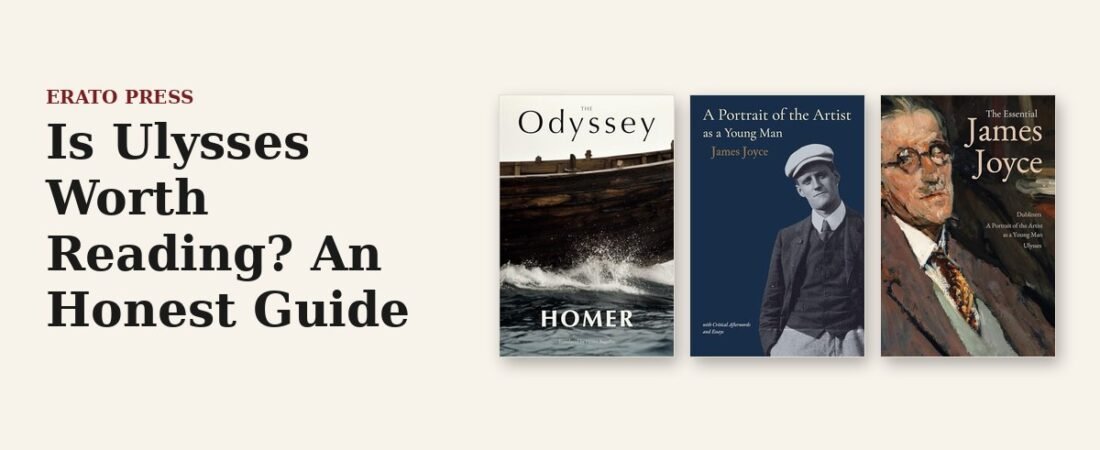
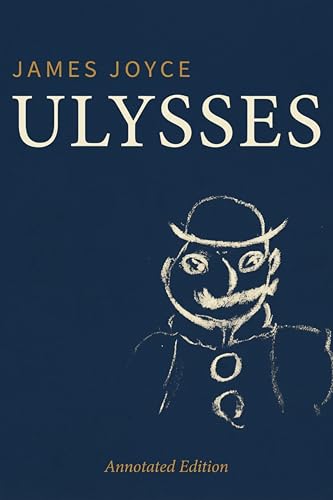
Use a good annotated edition or a companion — Joyce buried thousands of references and expected you to need help; he was not testing you, he was building a world. Read the early “easy” chapters carefully, then give yourself permission to drift through the hardest ones; you can always return. Don’t quit at the notorious episode fifteen. Get to Molly. The pleasure is real, and it’s earned. If the day takes hold, you can read it inside the full arc — Dubliners, Portrait, Ulysses — in The Essential James Joyce, which is the surest way to feel why that final Yes means what it means.
Read the Erato Press annotated Ulysses →
Related reading: Modernism Explained: A Reader’s Guide · Where to Start With James Joyce · Dubliners: The Best Way Into Joyce
This article draws on the original critical essay “The Book of the World,” written for the Erato Press edition. This article contains affiliate links; as an Amazon Associate, Erato Press earns from qualifying purchases.
Enjoyed this piece?
Get the next one — our essays on the classics and news of each new Erato Press edition — straight to your inbox.