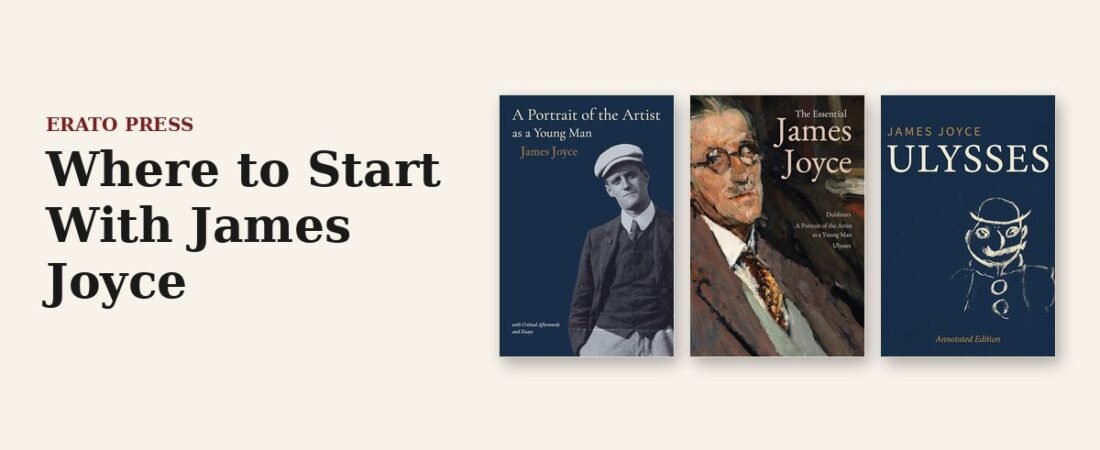
Short answer: Start with Dubliners, then A Portrait of the Artist as a Young Man, and only then consider Ulysses. Joyce is not a wall to be scaled in one heroic climb; he’s a staircase, and each book teaches you how to read the next. Skip the steps and you’ll fall; take them and you’ll arrive somewhere extraordinary.
The most rewarding reading project in English
James Joyce spent his life writing, in effect, one expanding work: the story of Dublin and of consciousness itself, told at ever-greater magnification. The career is unusually coherent, which is good news for a new reader, because it means there really is a correct order — and following it turns an intimidating reputation into a series of manageable, thrilling steps. The Jesuits gave Joyce precision of thought, the examination of conscience, a whole theology of sin and grace; he abandoned the faith and used its own intellectual tools to dismantle it from the inside. Stephen Dedalus’s famous “I will not serve” is not a rejection of rigor. It is rigor turned against its own institutional source. That is the engine of all four books.
Step one: Dubliners
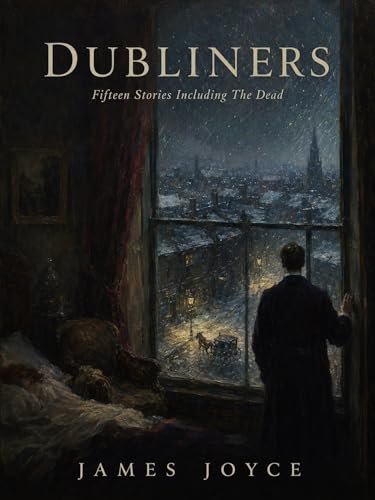
Begin here. These fifteen stories look like conventional realism — and are quietly revolutionary. Each builds to an “epiphany,” a sudden flash of self-revelation, and the final story, “The Dead,” is among the most perfect things in the language. Dubliners teaches you Joyce’s central faith: that the ordinary, looked at hard enough, becomes luminous. It is also his most honest statement about what art can and cannot do — it can produce consciousness; it cannot, by itself, produce change. The book diagnoses a city’s paralysis with a physician’s patience, and refuses to pretend it has the cure.
Step two: A Portrait
Next comes the semi-autobiographical novel of a young man’s growth, written in a style that grows up with its hero — baby-talk on the first page (“Once upon a time and a very good time it was”), soaring rhetoric by the last. This is where Joyce introduces the stream of consciousness you’ll need for what comes next. But read it with one eye open: A Portrait of the Artist as a Young Man is not a straightforward hymn to the young artist. It is the portrait of an artistic self-deception, shaped by an irony that runs invisibly under the entire structure — the cold, self-exempting aesthetic theory Stephen builds will be tested, and found wanting, in the book that follows.
Step three: Ulysses (if you choose)
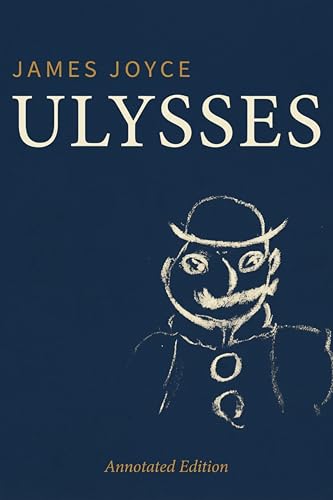
Now, and only now, the masterpiece — a single Dublin day (16 June 1904, immortalized as Bloomsday) rewritten as an odyssey, each chapter in a different style. With Dubliners and Portrait behind you, its difficulty becomes exhilarating rather than crushing, because you arrive knowing what the book is for: it sends the cold artist Stephen toward the warm, ordinary Leopold Bloom, and asks whether the self built on the word “no” can ever learn to say “yes.” Molly Bloom’s final word answers. And if you stop after the first two books, you’ll still have read one of the great writers in full command. There’s no shame in choosing the staircase over the summit. The cleanest way to climb all three in order is The Essential James Joyce, which prints them in one volume so the arc is visible as a single movement of a mind examining its own formation.
Related reading: Modernism Explained: A Reader’s Guide · Is Ulysses Worth Reading? An Honest Guide · Dubliners: The Best Way Into Joyce
This article contains affiliate links; as an Amazon Associate, Erato Press earns from qualifying purchases.
Enjoyed this piece?
Get the next one — our essays on the classics and news of each new Erato Press edition — straight to your inbox.