
Short answer: The classic detective story is one of literature’s great machines for thinking about order, and four bodies of work contain its entire DNA: Conan Doyle’s Sherlock Holmes, Chesterton’s Father Brown, Wilkie Collins’s The Woman in White, and Dashiell Hammett’s hard-boiled trilogy. Between them they stage the form’s four great answers to a single question — is the world legible, and at what cost?
Why detective fiction matters more than it pretends to
The mystery is routinely dismissed as a guilty pleasure — a puzzle to kill an afternoon, a beach book with a body in it. But the detective story is secretly the most philosophical of all popular forms, because it is built on a single audacious assumption: that the world is legible. That every phenomenon has a cause, every effect an explanation, every mystery a solution waiting to be read off the surface of things by someone who bothers to look. This is not common sense; it is a specific intellectual commitment — the nineteenth-century positivist faith that the methods of science can be turned on the messiest, most irrational corners of human experience. Every great detective is a small argument that meaning is recoverable, that chaos and violence can be reasoned back into order. The four traditions below are really four positions in a two-century-long quarrel about whether that faith is justified — and what it costs to hold it.
The reasoner: Sherlock Holmes
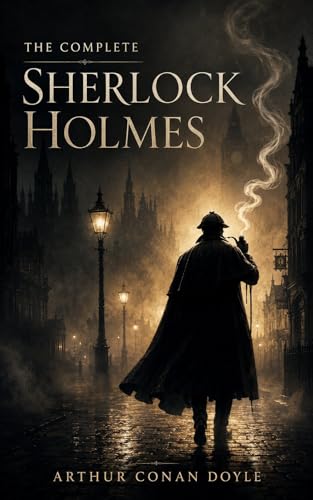
Conan Doyle’s Sherlock Holmes is the template, the figure every later detective answers to. He reads the world like a text covered in legible signs — the callus on a thumb, the splash of mud on a trouser-leg, the wear pattern on a sleeve — and turns each into a chain of inference that, once explained, looks inevitable. “Elementary,” he says, and the word reframes the miraculous as the merely obvious, available to anyone who would only look. The method had a real origin: Doyle modelled Holmes on Dr. Joseph Bell, an Edinburgh surgeon who could deduce a stranger’s trade and history from a glance, and who performed those deductions theatrically, for an audience. Holmes inherits the theatre. His genius is never private; it is staged for Watson, the client, the police, and us. Start with the short stories, where the form’s compression suits his lightning method — The Adventures of Sherlock Holmes is the perfect entry — and only then the four novels, of which The Hound of the Baskervilles is the masterpiece.
Get the Complete Sherlock Holmes →
The intuitive: Father Brown
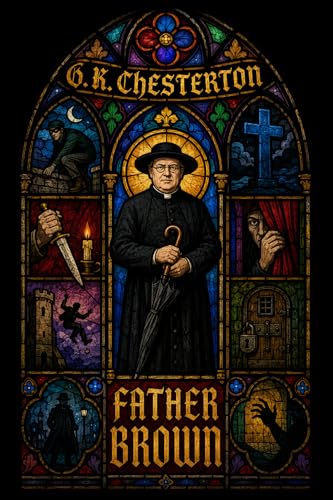
G. K. Chesterton built his Father Brown stories as a deliberate answer to Holmes. Where Holmes reasons from the outside in — evidence, deduction, the cold gaze of science — the dumpy little priest solves crimes from the inside out, by understanding sin from within. “I had murdered them all myself,” he explains; he catches the criminal by imaginatively becoming him, because in the confessional he has heard every variety of human wickedness and knows the line between himself and any murderer is thin. Chesterton’s sly argument is that the priest’s method is the more realistic one: crimes are committed by souls, and only someone who understands his own soul can understand them. The thinking machine sees everything and grasps nothing of the heart. For the full contrast, read Holmes and Father Brown side by side — the detective story doubling as a debate between the head and the soul.
Read the essential Father Brown →
The suspense: Collins and the sensation novel
Before the puzzle hardened into a genre, there was suspense — and suspense was largely invented by Wilkie Collins. The Woman in White (1860) built the machine the modern thriller still runs on, and it did so with a formal trick that feels startlingly contemporary: the story is assembled from letters, diaries, and depositions, “as the story of an offence against the laws is told in Court by more than one witness,” so that no single narrator knows the whole truth and the reader must piece it together. That same multi-narrator, found-document technique runs straight through to the epistolary horror of Dracula and every “found footage” story since. Collins also relocated evil: not to a gothic castle abroad but inside the respectable English home, behind the lace curtains of the middle class.
The mean streets: Hammett and the hard-boiled turn
Then, in 1920s America, the form took its hard turn into moral murk. Where the classic puzzle treats crime as an aberration in an orderly world, the hard-boiled story treats crime as the medium everyone swims in. Dashiell Hammett — once a Pinkerton operative himself — wrote Red Harvest, The Dain Curse, and The Maltese Falcon as social realism with a body count: the police corrupt, the rich criminal, the detective no genius savant but a tired professional with a private code in a world where almost everyone is for sale. Solving the case restores no order, because there was none to restore. The most the detective can do is keep his own integrity intact. It is the exact inverse of Holmes’s faith — and reading it against the others tells you the whole arc of the form, from reason triumphant to reason exhausted.
Read Hammett’s hard-boiled trilogy →
Where it all began
All four trace back to one source. Read these in conversation and you can watch the detective story discover, lose, and complicate its founding faith — and if you want the origin point, go back to Edgar Allan Poe, whose Dupin tales in the 1840s invented the armchair reasoner Holmes would make immortal.
Related reading: The Complete Sherlock Holmes: A Reading Guide · Sherlock Holmes vs Father Brown: Two Kinds of Detective · The Woman in White and the Birth of the Sensation Novel · Hard-Boiled vs Cozy: The Two Souls of Crime Fiction · Edgar Allan Poe: Where to Start
This article contains affiliate links. As an Amazon Associate, Erato Press earns from qualifying purchases.
Enjoyed this piece?
Get the next one — our essays on the classics and news of each new Erato Press edition — straight to your inbox.