Short answer: The Odyssey survives not because it is old but because it asks permanent questions — what it means to come home, what we owe those who wait, how a self holds together through change and suffering and time. It gave us the first complex character in Western literature and the template for every journey-home story since. Three thousand years on, it still reads like a novel you cannot put down — which is exactly why Nolan is filming it.
A poem about coming home
Strip the Odyssey of its monsters and one word remains at its center: nostos, homecoming — the root of our nostalgia, literally the ache of the return. The whole poem is one long nostos, and what makes it permanent is that it refuses to make homecoming simple. Odysseus spends ten years fighting to reach Ithaca, and the world he returns to is not the world he left: his father has retreated to the farm in grief, his mother has died waiting, his son has grown up without him, his house has been occupied by men who do not respect the old order. As our edition’s essay puts it, the homecoming “is also a confrontation with the ravages of time.” Anyone who has ever gone back to a place they loved and found it changed knows exactly what this poem is about.
The man who chose home over immortality
The poem’s quiet, radical center is a refusal. The goddess Calypso offers Odysseus immortality — eternal life on a paradise island, ageless, beside a beautiful goddess — if he will only stay. He says no. He chooses his mortal wife, his rocky island, his own death someday, over a deathless exile. Set this beside the Iliad, where Achilles chooses a short life of glory, and you see the Odyssey quietly proposing a different value: not glory, not even immortality, but home — the ordinary, mortal, time-bound life with the people who are yours. In Book 11, even great Achilles, now a shade among the dead, confesses he would rather be a landless serf among the living than king of all the dead. The poem keeps choosing life, in all its limitation, over the heroism that despises it.
The first complex character
Odysseus is, as the essay argues, “the first literary character, in the Western tradition, whom we might call complex.” He has an inner life; he has contradictions; he adapts his behavior to his circumstances in ways that raise the question of what, if anything, stays constant beneath the adaptations. He is polytropos — of many turns — cunning and brave, ruthless and tender, a liar and a lover of truth. The poem does not ask us to admire him uncritically. It asks us to attend to him carefully and judge for ourselves. In an age of simple narratives and easy moralizing, that demand for complex attention is rarer and more valuable than ever.
Penelope, and a cunning to match
And the Odyssey is not only his. Penelope is his equal in mind — periphron, the intelligence that thinks around a problem. Unable to act directly against a house full of suitors, she turns time into a weapon: weaving and secretly unweaving her father-in-law’s shroud to delay them for years. And in the great recognition scene, it is she who tests him — with the secret of their marriage bed, built around a living olive tree, rooted and immovable. The bed is the marriage itself: rooted, secret, surviving twenty years of absence. A poem three thousand years old gives us a portrait of a marriage between two clever, guarded, evenly matched people that almost no later story has bettered.
The law of the stranger
The Odyssey is obsessed with xenia — the sacred duty to welcome a stranger, feed and house him before you even ask his name, because Zeus himself protects the guest. It is easy to dismiss as quaint until you notice the poem’s whole moral architecture rests on it: the monstrous Cyclops who eats his guests and the suitors who devour their absent host’s house are the same crime at different scales. In a world that still struggles over how it treats the stranger at the door, a poem that makes hospitality a cosmic law is not a relic. It is a question we have not answered.
Why we keep retelling it
The Odyssey is the original adventure story and the original homecoming, and its shape is everywhere downstream — in Joyce’s Ulysses, in every road movie and returning-soldier story, in Dante’s journey through the afterlife, in the whole tradition our guide to the Greek classics maps. We keep retelling it because its questions never close. What does it mean to come home? What do we owe those who waited? How do we stay ourselves through everything that changes us? Those are not ancient questions. They are human ones, as urgent now as when a blind singer first gave them voice. And the poem answers them not with arguments but with beauty: the heart of Odysseus tossing like a sausage over a fire, Penelope melting like snow on the mountains, an old dog who waits twenty years, recognizes his master, and dies.
That is the thing no film can photograph — the reason to read Homer before the lights go down on Nolan’s Odyssey in July. A movie can show you the journey. Only the poem can put you inside the traveler.
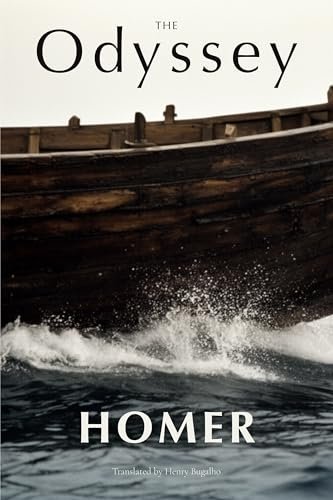
Read the Erato Press Odyssey →
Related reading: The Odyssey: A Complete Guide · Greek Classics: Where to Begin · Nolan’s Odyssey and the Casting Backlash
This article contains affiliate links; as an Amazon Associate, Erato Press earns from qualifying purchases.
Enjoyed this piece?
Get the next one — our essays on the classics and news of each new Erato Press edition — straight to your inbox.