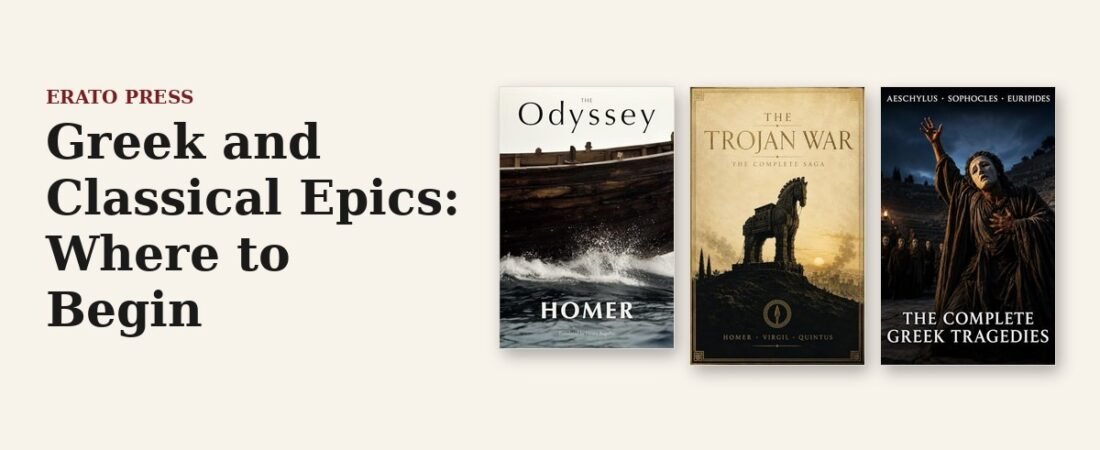
Short answer: Start with The Odyssey — the most welcoming of the ancient epics — then read The Iliad for its terrible grandeur, dip into Hesiod’s Theogony for the myths everything else takes for granted, and finish with Dante’s Divine Comedy, the great medieval heir to the classical tradition. In good prose translations, all of them are far more readable than the reputation of “epic verse” suggests.
Why read the ancients at all
Because they are the headwaters. Almost every story we tell — the journey home, the rage of the warrior, the descent into the underworld, the hero forced to choose between glory and life — was given its first and often its greatest form here, three thousand years ago. To read the Greek and classical epics is to discover that you already half-know them: they are the bedrock everything since is built on, and meeting them directly is a permanent enlargement of how you read everything else. The good news is that you do not have to read them in difficult verse. A living prose translation lets each one move like a novel, which is how listeners first received them — around a fire, as story.
Begin with The Odyssey
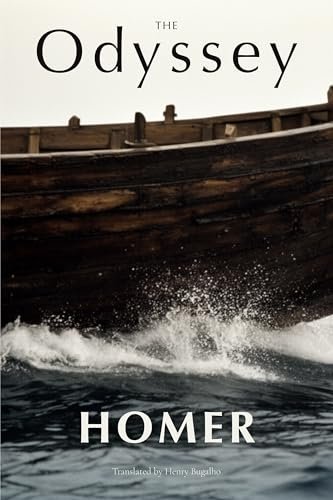
Homer’s Odyssey — the ten-year voyage home of Odysseus, past the Cyclops, the Sirens, the witch Circe, to the faithful, cunning Penelope — is the perfect entry point: an adventure of monsters and tricks that is also the first great meditation on homecoming, identity, and what it means to endure. Its hero wins not by strength but by wits, which makes him the ancestor of most of the protagonists we now prefer. Read it in prose and it is, astonishingly, still a page-turner.
Read the Erato Press Odyssey →
Then The Iliad — the hard, great one
Where The Odyssey is about coming back, The Iliad is about going to war — and it is the greater poem, the most unflinching account of the cost of violence ever written. It names its dead, one man at a time, and grants the Trojan Hector as much humanity as any Greek; its climax is not a triumph but two enemies, Achilles and old King Priam, weeping together over what each has lost. It is harder than the Odyssey and worth every page.
If the Trojan War takes hold of you, the whole saga — the Iliad, the Odyssey, Virgil’s Aeneid, and the lost epic cycle reconstructed in one volume — is gathered in The Trojan War: The Complete Saga.
Then the myths and the medieval summit
For the gods and origins the epics simply assume, read Hesiod’s Theogony — the birth of the cosmos from Chaos, the war of the Titans, the rise of Zeus — which gives the whole tangle of Greek myth a family tree and a logic. And to see the classical tradition reborn in the Christian Middle Ages, read Dante’s Divine Comedy, the supreme poem of the afterlife, which takes Virgil himself as its guide and carries Homer’s underworld forward into a new key. Readers who want to follow the myths onto the Athenian stage can go on to the complete Greek tragedies, where the same stories of Troy and the house of Atreus are turned into drama.
A reading order, in one line
Odyssey for the adventure, Iliad for the depth, Theogony for the background, Dante for the inheritance. Take them in that order and you will have walked, in four books, from the headwaters of Western literature to the moment it learned to look back at itself.
Related reading: The Odyssey: Why Homer Still Matters · Reading Homer: The Iliad and the First Epic of War · Greek Mythology 101: Hesiod and the Birth of the Gods · Dante’s Divine Comedy: A Map of the Afterlife
This article contains affiliate links. As an Amazon Associate, Erato Press earns from qualifying purchases.
Enjoyed this piece?
Get the next one — our essays on the classics and news of each new Erato Press edition — straight to your inbox.