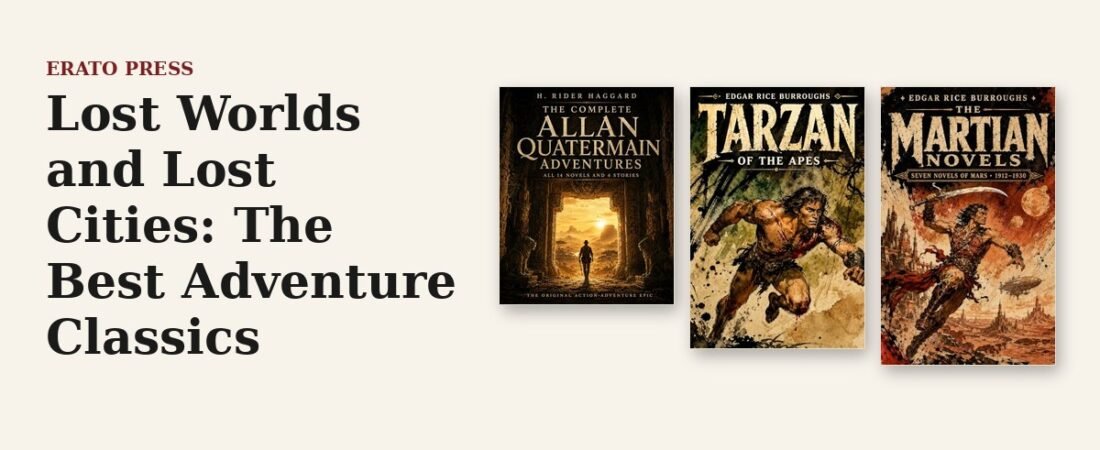
Short answer: The lost-world adventure — explorers stumbling on hidden civilisations, prehistoric survivals, or buried cities — is one of fiction’s most enduring fantasies. The essentials are Haggard’s Allan Quatermain, Burroughs’s Tarzan and Mars novels, and Verne’s Extraordinary Voyages. Together they built the dream-machine that still powers our blockbusters.
Why we never tire of lost worlds
The lost-world story answers a deep and slightly melancholy wish: that the map is not yet fully filled in, that somewhere beyond the known there is still wonder, danger, and discovery. It was born in the late nineteenth century, exactly as the last blank spaces on the real map were being coloured in — which is no coincidence. The genre is partly a reaction to a shrinking world, a way of keeping the unknown alive in imagination once it was vanishing from geography. The hidden kingdom behind the impassable barrier is a structural solution to a problem the age of exploration had created: how to stage genuine discovery in a world that had run out of unexplored ground. Its persistence into the age of satellites tells you how badly we still need it.
The three founders
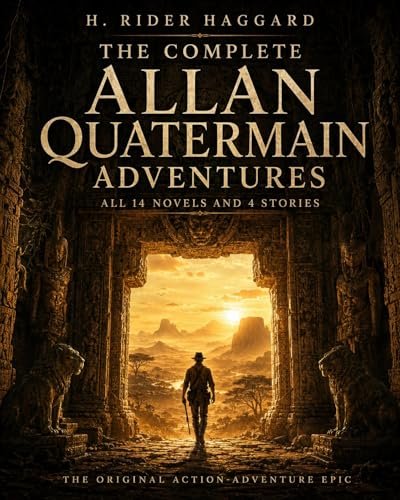
Haggard gave us the buried civilisation and the treasure quest in King Solomon’s Mines, along with the laconic hunter-narrator every adventure hero since has imitated. Burroughs gave us the jungle lord and the dying alien world — Tarzan and Barsoom — and with them the planetary romance. Verne gave us the descent into the earth and the depths of the sea, grounded in real science, in his Extraordinary Voyages. Read across the three and you have the complete genetic code of modern adventure.
The buried tragedy of the genre
Read attentively, these books are more haunted than they look. The hidden kingdom is always doomed by the very moment of its discovery: the societies the explorers find are usually more stable and self-sufficient than the colonial world around them, and the explorers’ arrival is, at some level, a catastrophe that begins the kingdom’s end. The colonial encounter did not require malice, only contact. That is why the lost world is only ever “lost” to the men who claim to find it — and why the best of these novels carry a melancholy their imitators usually drop. Reading the originals means feeling both the thrill of discovery and the ache of what discovery destroys.
From the page to the screen
Trace the line forward and you find these books everywhere: Indiana Jones is Quatermain with a whip; the lost-world films and planetary romances of modern cinema are Burroughs and Verne with a bigger budget. To read the originals is to find the source of pleasures you have enjoyed your whole life without knowing where they came from — and to discover that the sources are stranger, darker, and richer than their descendants.
Allan Quatermain → Tarzan → Verne’s Voyages →
Related reading: The Classic Western Novels Worth Reading · Edgar Rice Burroughs: Tarzan, Mars, and Pulp Adventure · Allan Quatermain and the Lost-World Adventure · Jules Verne: Where to Start With the Extraordinary Voyages
This article contains affiliate links; as an Amazon Associate, Erato Press earns from qualifying purchases.
Enjoyed this piece?
Get the next one — our essays on the classics and news of each new Erato Press edition — straight to your inbox.