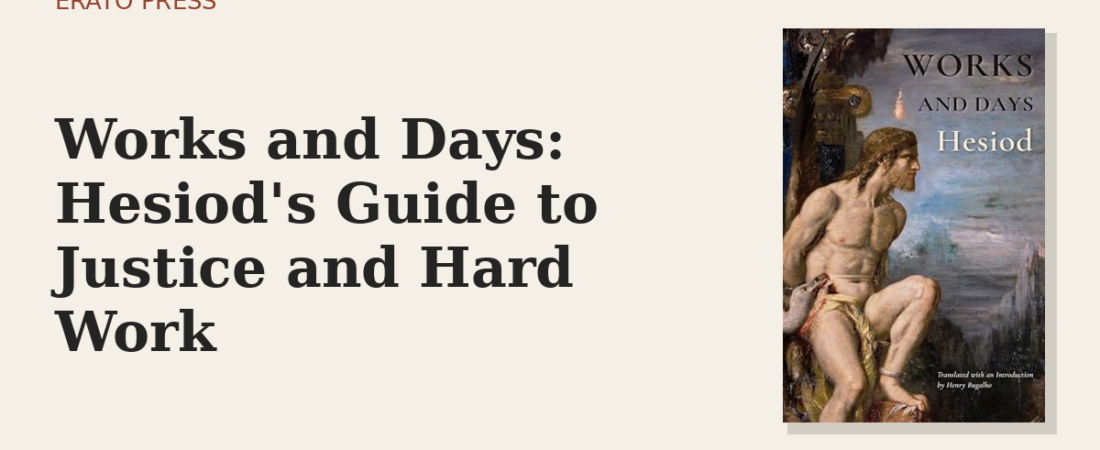

Where Theogony gave the Greeks their gods, Works and Days gives them a farmer’s almanac fused with a moral argument — Hesiod, writing directly to a brother who had cheated him out of part of their inheritance through bribed judges, moves from a furious case for justice straight into practical instructions for plowing, pruning, and knowing which winds mean a storm is coming.
The combination sounds strange to modern readers, but Hesiod’s point is exactly that justice and labor are the same discipline: a world where judges can be bought is a world that also, eventually, punishes everyone with famine, and the only real defense against both kinds of corruption is patient, honest work. It’s the oldest surviving Greek poem to argue that ethics and agriculture are the same subject.
Alongside Theogony’s cosmic myth-making, it shows the other half of Hesiod’s project — the same poet turning from the birth of the universe to the much smaller, harder question of how to live honestly inside it.
Enjoyed this piece?
Get the next one — our essays on the classics and news of each new Erato Press edition — straight to your inbox.