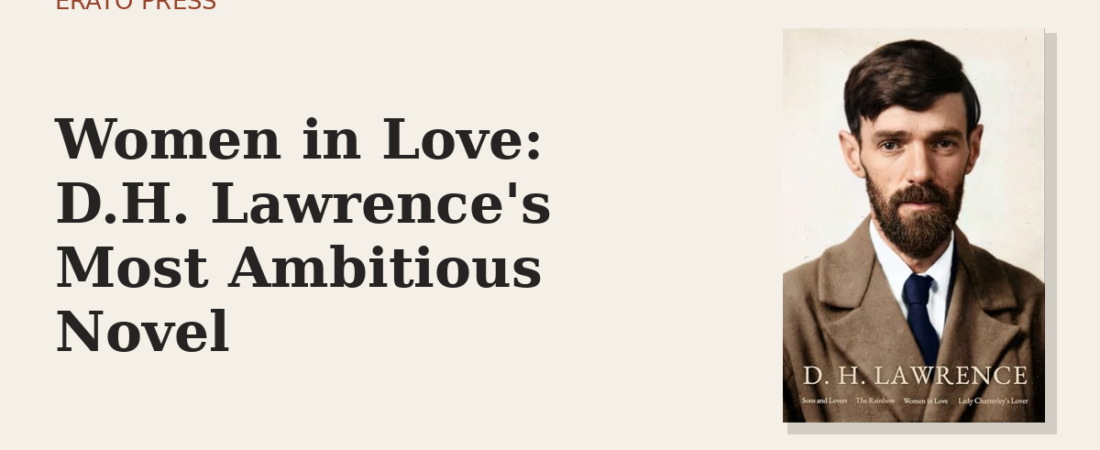

Two sisters, two very different men, and a novel Lawrence considered his most important work — more ambitious than the more famous Lady Chatterley’s Lover, and considerably stranger. Gudrun and Ursula Brangwen pursue love with Gerald and Rupert as a philosophical proposition as much as a romance, testing whether real intimacy between equals is even possible in a modern, industrialized world Lawrence believed had gone badly wrong.
Its most notorious scene, a nude wrestling match between the two men that Lawrence stages with unmistakable homoerotic charge, was cut from early editions and remains the moment critics return to most often when arguing about what Lawrence actually believed intimacy required. The novel refuses easy pairing-off; one relationship ends in near-mystical harmony, the other in a death that reads as inevitable from its first chapter.
It’s the most philosophically dense of the four novels gathered here, sharing shelf space with the more scandal-famous Lady Chatterley’s Lover but arguably doing more of Lawrence’s real thinking.
Read D. H. Lawrence: Four Major Novels →
Enjoyed this piece?
Get the next one — our essays on the classics and news of each new Erato Press edition — straight to your inbox.