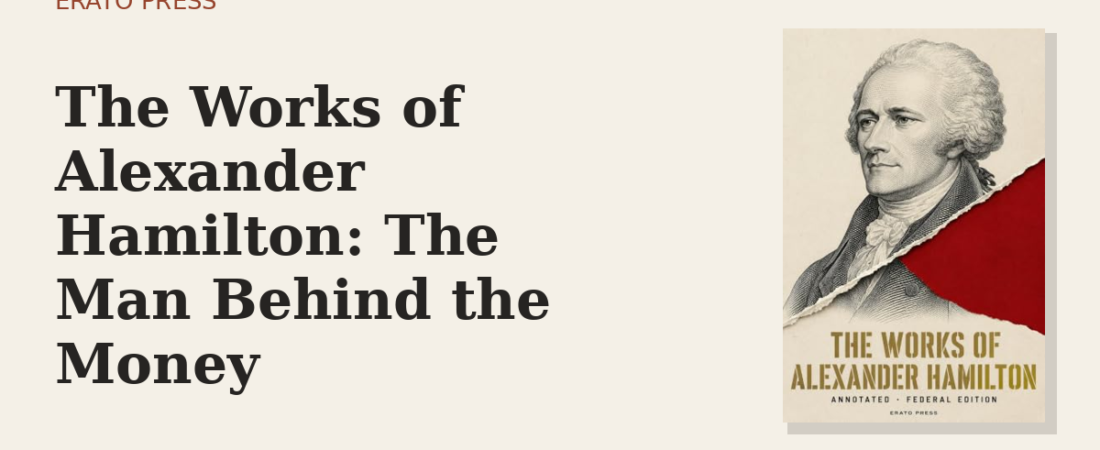

Hamilton wrote fifty-one of the eighty-five Federalist essays, more than Madison and Jay combined, and then went on to personally design the institutions the essays had only argued for in the abstract: a national bank, a funded federal debt, a treasury with real teeth. Reading his complete papers makes clear how unusual he was among the founders — less a philosopher of liberty than an engineer of state capacity, impatient with anyone who wanted independence without the machinery to make it durable.
It also shows the temperament that eventually killed him: the papers are full of furious, meticulously argued responses to perceived slights, the same instinct that led him, at fifty, to accept a duel he almost certainly knew he might not survive.
Read against the Federalist Papers themselves, this is Hamilton with the persuasive mask off — arguing not for ratification anymore, but for the specific, often unpopular policies that made the argument real.
Read The Works of Alexander Hamilton →
Enjoyed this piece?
Get the next one — our essays on the classics and news of each new Erato Press edition — straight to your inbox.