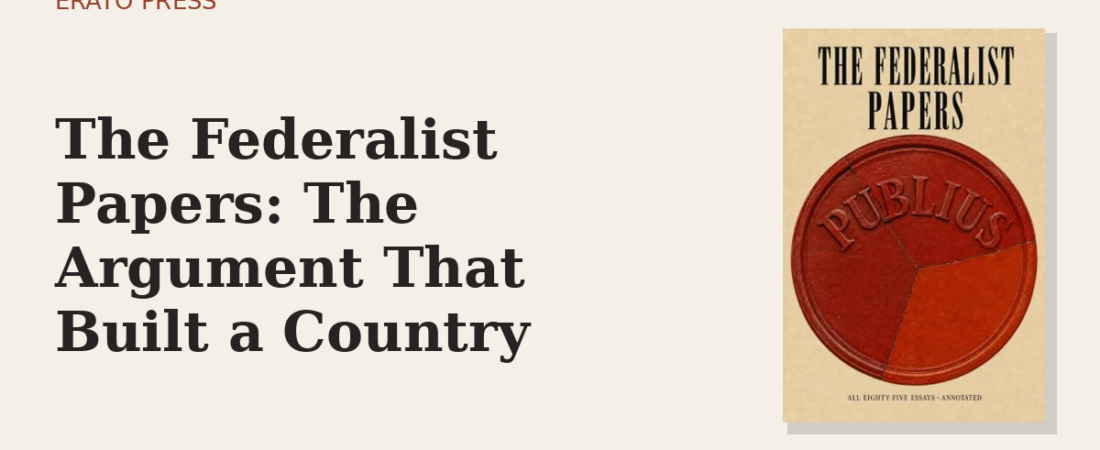

Eighty-five newspaper essays, written under a single pseudonym by three men in a hurry, to sell a document most Americans hadn’t read and many distrusted. That’s what the Federalist Papers actually were in 1787 and 1788 — not scripture, but campaign literature, written fast and published under deadline to get the Constitution ratified in a New York where it was far from a sure thing.
What makes them endure is that Hamilton, Madison, and Jay didn’t just argue for the document; they explained, essay by essay, why a government built on checks, factions, and divided power was safer than one built on trust in any single virtuous ruler. Federalist No. 10, Madison’s essay on the danger of faction, is still the clearest short explanation ever written of why the American system is built to be slow.
Read alongside The Invention of the United States, the Papers stop looking like a founding myth and start looking like what they were: a hard sell, made by men who weren’t at all sure it would work.
Enjoyed this piece?
Get the next one — our essays on the classics and news of each new Erato Press edition — straight to your inbox.