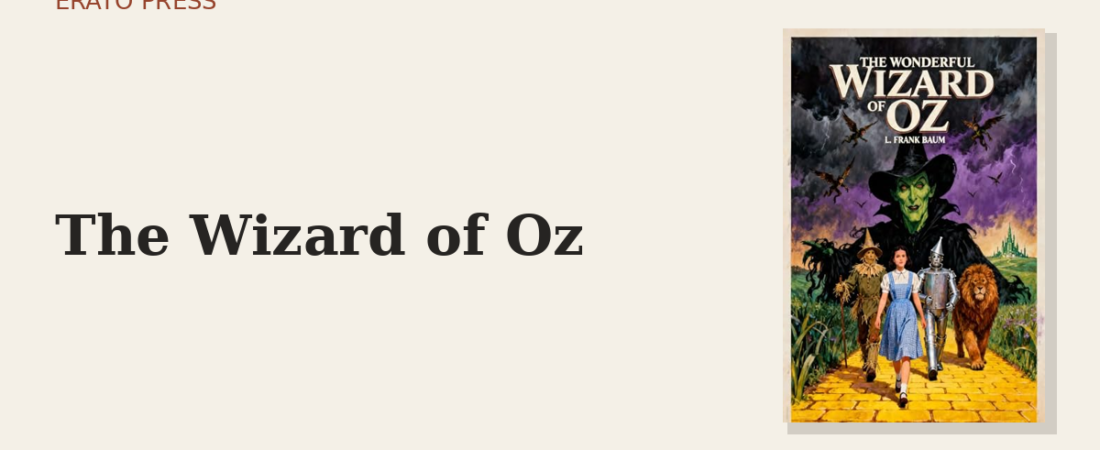

We have called it America’s own fairy tale. But The Wonderful Wizard of Oz has a second life as one of the most argued-over books in American letters — because generations of readers have been convinced that beneath the yellow brick road lies a coded political allegory of its own moment, the 1890s.
The reading is irresistible, whether or not Baum intended it. A Kansas farm girl (the heartland) is swept to a land where a Scarecrow (the farmer, told he has no brains), a Tin Man (the industrial worker, rusted and dehumanized), and a Cowardly Lion (the politician, all roar and no nerve) follow a road of gold to beg help from a Wizard — a humbug behind a curtain who rules by illusion. The silver slippers (changed to ruby by Hollywood) carry Dorothy home. To readers who know the fierce 1890s battle over gold and silver money, it reads like a populist parable in disguise.
Scholars still argue about how much Baum meant. But that a children’s fantasy can carry such freight is the point: the best fairy tales are never only for children. Like Alice, Oz is a nonsense world that turns out to be about the real one.
This edition presents the complete text with its original spirit intact.
Read The Wonderful Wizard of Oz →
Enjoyed this piece?
Get the next one — our essays on the classics and news of each new Erato Press edition — straight to your inbox.