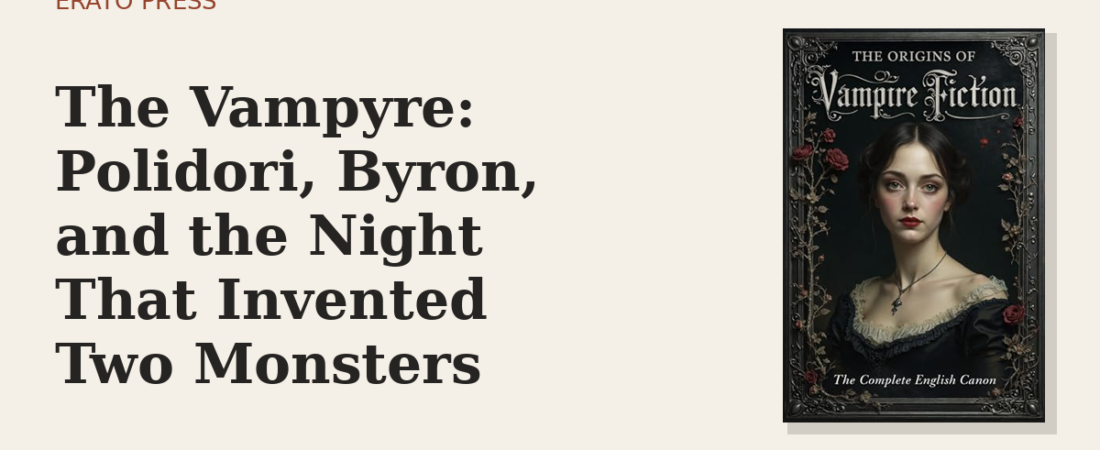

The same rain-soaked night at Villa Diodati in 1816 that produced Mary Shelley’s Frankenstein also produced this: John Polidori, Byron’s personal physician, turning a fragment Byron abandoned into The Vampyre, the story that essentially invented the modern vampire as a seductive aristocrat rather than a mindless folkloric corpse. Polidori’s Lord Ruthven was, not coincidentally, a thinly veiled and unflattering portrait of Byron himself.
Published initially and wrongly credited to Byron, the story caused a minor scandal on both counts — for the perceived slander of a famous poet, and for establishing a template of aristocratic, charming, sexually magnetic monstrousness that Le Fanu’s Carmilla and eventually Stoker’s Dracula would each inherit and refine.
Read next to Frankenstein, it’s remarkable how much of modern horror’s DNA traces back to one bored, competitive house party of poets waiting out a storm.
Read The Origins of Vampire Fiction →
Enjoyed this piece?
Get the next one — our essays on the classics and news of each new Erato Press edition — straight to your inbox.