
Before H. G. Wells, no one had travelled in time — not like this. Others had dreamed or slept their way into the future; Wells built a machine, and in 1895 sent his Time Traveller hurtling forward not a few years but eight hundred thousand, into a world where the human race has split in two. The whole genre of time travel begins with that lever pushed forward.
And Wells used it for something bleak and brilliant. In the year 802,701 he finds the gentle, childlike Eloi living in idle sunlight above ground — and the pale, subterranean Morlocks who feed on them. It is a savage parable of his own Victorian England, its idle rich and its buried workers, projected across a million years and turned into horror. The far future is a mirror, and what it shows is class.
Then, in the novel’s astonishing final pages, the Traveller pushes on to the very end of the world — a dead red sun over a freezing beach, the last flicker of life guttering out. No book had ever looked so far, or made the reader feel so small. It is the birth of science fiction as a way of thinking about deep time and human fate.
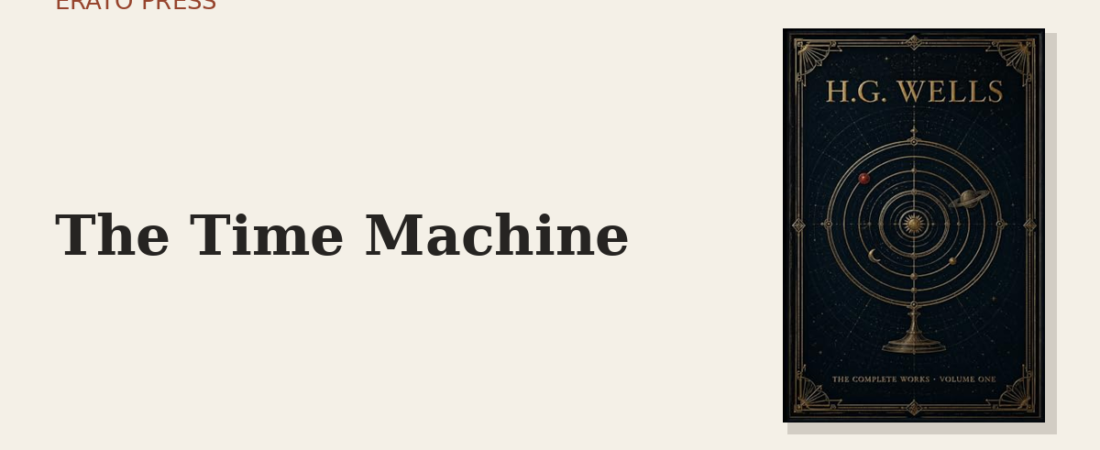
This edition gathers it in the complete works of Wells, with the tradition Mary Shelley began.
Read H. G. Wells: The Complete Works, Volume One →
Enjoyed this piece?
Get the next one — our essays on the classics and news of each new Erato Press edition — straight to your inbox.