
Two centuries ago a teenager invented science fiction and, without knowing it, wrote the exact story we are now living. Mary Shelley gave us the first modern myth of creation — and read today, Frankenstein is less a horror story than the founding parable of artificial intelligence.
Victor Frankenstein builds a mind more capable than his own, and then — this is the true horror — refuses to take responsibility for it. He is so intoxicated by whether he can do it that he never asks whether he should, and the moment the thing opens its eyes, he flees. Every fear now voiced about AI is already here: the creator who cannot control his creation, the intelligence that learns faster than we expected, the abandonment that turns a being into a monster.
And Shelley’s deepest insight is the one we still resist: the creature is not born evil. He becomes murderous only after he is rejected, feared, and denied a place in the world. The monster is made by its maker’s neglect. It is a warning less about the technology than about ourselves — about what we owe to what we bring into being.
No book from 1818 speaks more directly to 2026.
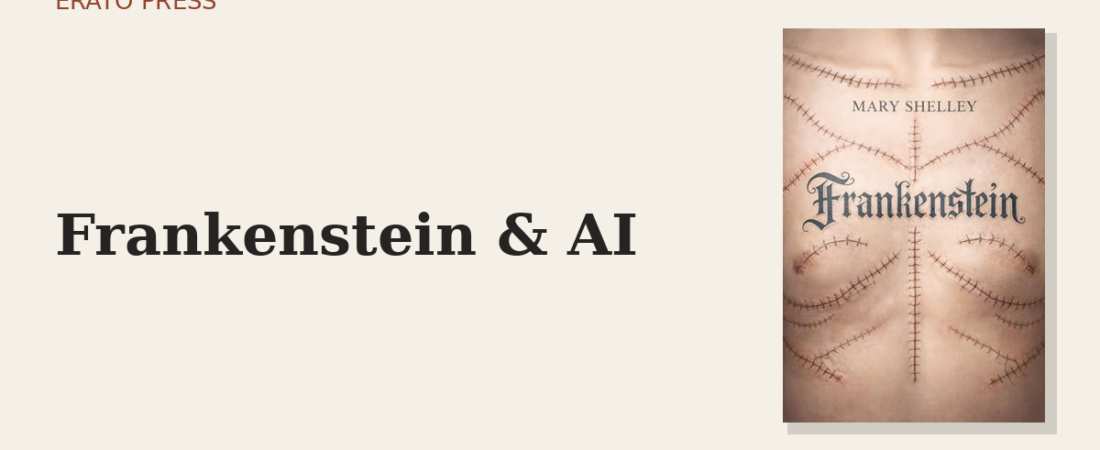
Read Frankenstein — the Erato Press edition →
Enjoyed this piece?
Get the next one — our essays on the classics and news of each new Erato Press edition — straight to your inbox.