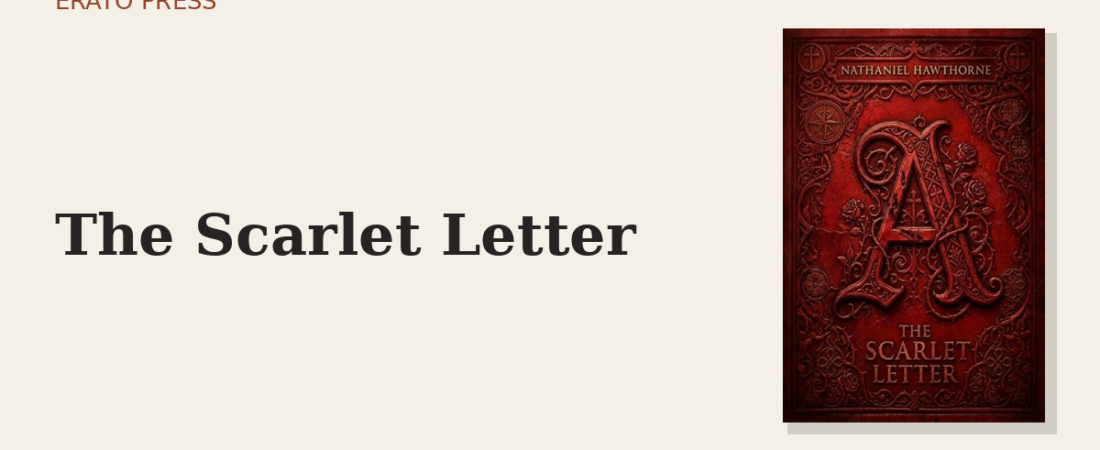

A woman is made to wear a red letter A, for adultery, sewn onto her breast so that her Puritan neighbours will never forget her sin. That is where The Scarlet Letter begins. Its genius is what Hawthorne does with that single symbol over the next two hundred pages: he lets its meaning change until no one, least of all the town, can control it.
Hester Prynne is meant to be shamed by the letter, and instead she transforms it. She embroiders it in gold thread; she wears it with such dignity, and lives so generously, that the townspeople start to say the A stands not for ‘adulteress’ but for ‘able’ — and later, some say, for ‘angel.’ The mark of disgrace becomes, by sheer force of character, a mark of distinction. Meanwhile the truly guilty man, the minister who hides his part, is eaten alive by the sin he will not confess: the letter he does not wear burns hotter than the one Hester does.
It is America’s first great psychological novel, and its subject — public shame, private guilt, and the difference between them — has only grown more relevant in an age that has rediscovered the pleasures of the pillory.
Read it beside the woman punished in Jane Eyre.
Read The Scarlet Letter — the Erato Press edition →
Enjoyed this piece?
Get the next one — our essays on the classics and news of each new Erato Press edition — straight to your inbox.