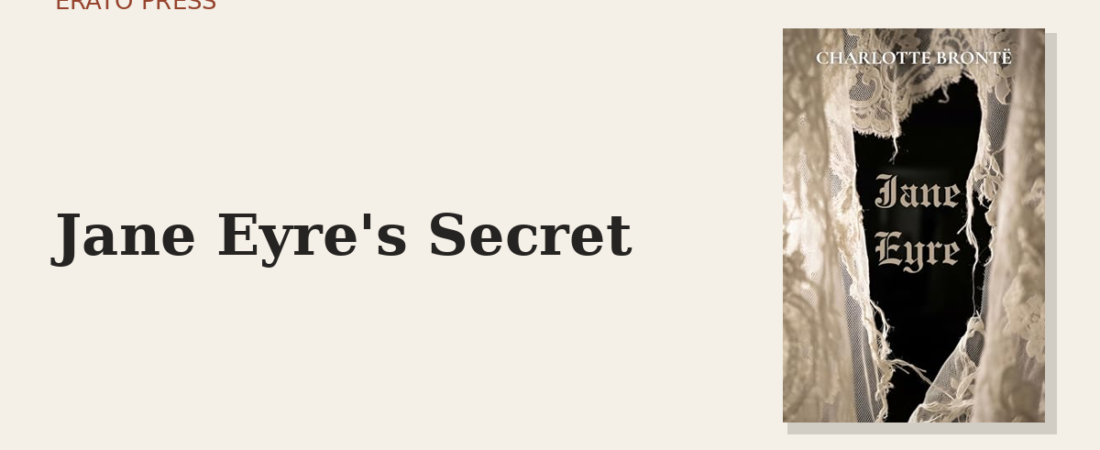

Jane Eyre is beloved as the story of a plain, poor governess who refuses to be anyone’s inferior and wins, on her own terms, the man she loves. It is all of that. But there is another woman in the novel, locked in an upstairs room, and once you notice her you cannot read the book the same way again.
Bertha Mason is Rochester’s first wife — mad, according to him, and kept caged in the attic of Thornfield while he courts Jane below. She is the novel’s dark secret and its guilty conscience. Whenever Jane’s own suppressed rage rises, it is Bertha who acts it out: it is Bertha who sets Rochester’s bed alight, Bertha who tears the wedding veil. She is the fury a well-behaved Victorian heroine is not allowed to feel.
A century later, Bertha would inspire a whole way of reading — the buried woman as the shadow-self of the respectable one, and the uneasy question of whose story the novel is really telling. Rochester’s colonial marriage, Bertha’s silencing: the romance rests on a locked door, and Charlotte Brontë, half-knowingly, put the key in plain sight.
It is a greater, stranger novel than its reputation — read it twice.
Read Jane Eyre — the Erato Press edition →
Enjoyed this piece?
Get the next one — our essays on the classics and news of each new Erato Press edition — straight to your inbox.