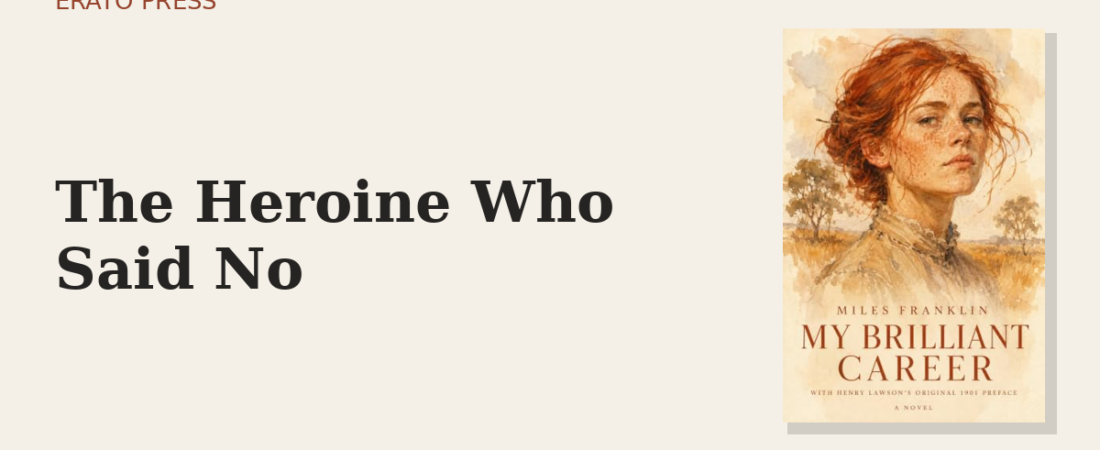

Every great heroine of the nineteenth century marries, or dies, or both. Sybylla Melvyn does neither — and that refusal is why My Brilliant Career still feels, more than a century on, like a small act of rebellion.
Franklin gives her heroine the plot of a romance and then detonates it. Sybylla is poor, plain by her own reckoning, and prickly; and yet she wins the love of Harold Beecham — wealthy, handsome, patient, genuinely good. Every convention of the age, and every expectation of the reader, demands that she accept him. Marriage would rescue her family from poverty and give her the security a woman of 1901 could get in no other way. And she says no.
She says no because she can see, clearly, what the yes would cost: herself. Her mind, her writing, her fierce unruly independence — all of it would be folded into being Mrs Beecham of a prosperous station. She would rather have her own uncertain life than someone else’s comfortable one. It was a shocking ending in its day; readers felt cheated of the wedding, and even Franklin’s admirers wished she had softened it. She never did.
Sybylla is the cousin of heroines we have written about — the Austen women doing the hard arithmetic of marriage, the rage locked in the attic of Jane Eyre — but she goes further than any of them. She refuses even the good man, even the happy ending, to keep the one thing that is only hers. No wonder each new generation, including the one now streaming her story, recognises her at once.
Read My Brilliant Career — the Erato Press edition →
Enjoyed this piece?
Get the next one — our essays on the classics and news of each new Erato Press edition — straight to your inbox.