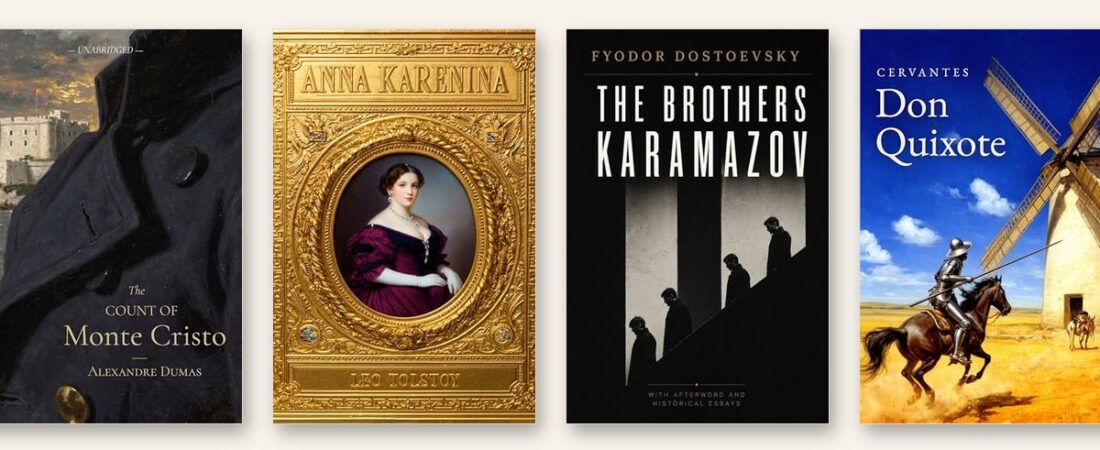
Short answer: Yes — but only the ones that actually need their length. The four long classic novels most worth reading are The Count of Monte Cristo, Anna Karenina, The Brothers Karamazov, and Don Quixote. If you’re starting from zero, begin with Monte Cristo: it’s the most fun, the most propulsive, and it’ll convince you that 1,200 pages can fly by.
TL;DR — A long novel that just fills time is a waste of it. These four give back more than they take: revenge and its real cost (Dumas), a marriage and a whole society (Tolstoy), faith and doubt (Dostoevsky), and the book that invented the modern novel (Cervantes). Reading time runs roughly 35–45 hours each. Worth it. Start with Monte Cristo, end with Quixote.
Let’s be honest about the real objection. It’s not that you don’t have time for a giant novel — nobody “has time,” we just spend it. It’s the fear of sinking three weeks into a brick and coming out the other side thinking well, that was long. Fair. So here’s the filter that matters: a great long novel isn’t long because the author couldn’t edit. It’s long because some things can only be felt if you live through them slowly. These four pass that test.
1. The Count of Monte Cristo
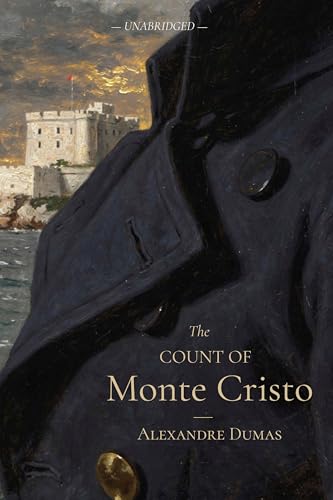
Alexandre Dumas · ~1,200 pages · ~45 hours
Best for: revenge thrillers, prison breaks, “I can’t put this down” momentum.
You already know the pitch: man gets framed, rots in a dungeon, escapes, comes back unimaginably rich and masked, and takes his enemies apart one by one. What nobody warns you about is that it’s the rare revenge story that keeps an honest ledger. Dumas never says vengeance was wrong. He says it was expensive — and that the bill included the man who paid it.
That’s the whole reason it’s 1,200 pages and not a short story: revenge is a long calculation, and Dumas makes you feel the interest compounding. The good news for first-timers — it doesn’t read long. The plot is an engine. You’ll be 300 pages deep before you notice you signed up for a doorstop.
Get the Erato Press unabridged Count of Monte Cristo (all 117 chapters) →
2. Anna Karenina
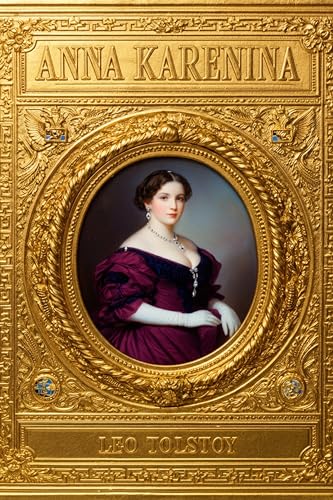
Leo Tolstoy · ~800 pages · ~35 hours
Best for: family drama, deep character studies, readers who like to feel seen.
“Happy families are all alike; every unhappy family is unhappy in its own way.” Most famous opening line in fiction — and it’s a bit of a con. It sounds like wisdom. Here’s the twist: Tolstoy doesn’t believe it. That line belongs to the narrator, not to him, and the next 800 pages quietly take it apart.
Don’t read this one for the scandalous affair you’ve heard about. Read it for Levin, standing in the dark outside his house, looking at the stars, finally getting something the famous first line swore was impossible. This is the novel that taught novels how to hold an entire society and one trembling human heart in the same hand.
Get the Erato Press annotated Anna Karenina →
3. The Brothers Karamazov
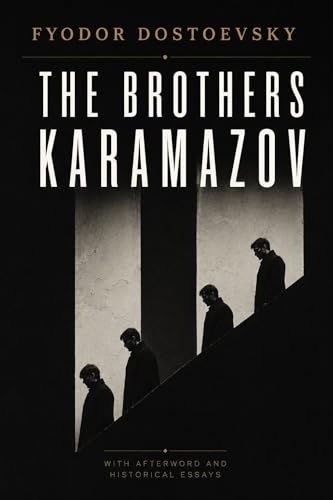
Fyodor Dostoevsky · ~800 pages · 350,000 words
Best for: big questions, moral arguments, readers who want a book to wrestle them.
There’s a specific kind of tired you feel after finishing Karamazov, and it’s not from effort — it’s from fullness. It’s 350,000 words, it’ll eat a few weeks, and yet it never feels long, only full: a book that couldn’t be shorter because every piece of it had to be there.
On the surface it’s a murder mystery in a grubby Russian town — drunks, monks, lawyers, kids, women who believe in miracles. Underneath, it’s the most serious argument fiction has ever staged about whether life can be justified at all. The excess is the point. It’s the hardest book here and the one you’ll think about for years.
Get the Erato Press annotated Brothers Karamazov →
4. Don Quixote
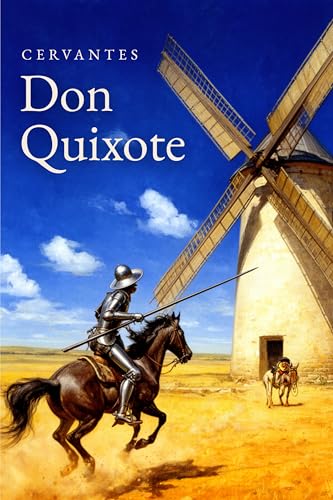
Miguel de Cervantes · ~1,000 pages · two volumes (1605 & 1615)
Best for: comedy, meta-fiction, anyone who likes a book that knows it’s a book.
This is the one where the novel figures out it’s a novel. Before Cervantes, prose fiction was a costume party of unexamined conventions. After him, the form becomes self-aware — which is a fancy way of saying every novel you’ve ever loved is secretly his grandchild.
It starts as a joke — Cervantes wanted to mock the cheesy knight-errant romances clogging the Spanish bookstalls — and somewhere in the writing the joke deepens into the most humane book ever written about the gap between the world we want and the world we get. You’ll read it and slowly realize, with some alarm, that the madman might be the sanest person in the book.
Get the Erato Press annotated Don Quixote →
Quick comparison: which long classic is right for you?
| Novel | Length | Read it if you like… | Difficulty |
|---|---|---|---|
| The Count of Monte Cristo | ~1,200 pp · ~45 hrs | Thrillers, revenge, plot-driven epics | Easy — pure page-turner |
| Anna Karenina | ~800 pp · ~35 hrs | Family drama, character studies | Moderate |
| The Brothers Karamazov | ~800 pp · 350k words | Philosophy, faith vs. doubt | Hard but rewarding |
| Don Quixote | ~1,000 pp · 2 vols | Comedy, meta-fiction | Moderate |
Where to start
Start with The Count of Monte Cristo. It grabs you by the collar and doesn’t let go, and it teaches you — painlessly — that length in a great novel isn’t a tax, it’s the whole experience. Once it has shown you that, you’re ready for the slower immensities of Tolstoy and Dostoevsky, and finally for Cervantes, who quietly contains them all. And if you finish Anna Karenina and can’t leave Tolstoy, his complete works will keep you busy for a year.
Browse Leo Tolstoy: The Complete Works (Erato Press) →
Frequently asked questions
Are long classic novels actually worth reading?
Yes — the ones that need their length. A great long novel isn’t padded; it’s long because the experience can’t be rushed. The Count of Monte Cristo, Anna Karenina, The Brothers Karamazov, and Don Quixote all reward the time, typically 35–45 hours of reading each.
Which long classic novel should I read first?
Read The Count of Monte Cristo first. It’s the most plot-driven and the easiest to fall into, so it’s the best gateway to longer classics.
How long does it take to read The Count of Monte Cristo?
About 40–45 hours of reading, or roughly 3–4 weeks at an hour a day. Short on time? There’s an abridged Erato Press edition with the essential story in about a third of the length.
Try the Erato Press abridged Count of Monte Cristo →
Are unabridged editions worth it?
For your first read of a plot-driven epic like Monte Cristo, an abridged edition is a fine on-ramp. But the unabridged classics are where the real depth lives — abridgments cut the digressions that often carry the book’s whole meaning. If you only read one version, read it unabridged.
This article contains affiliate links. As an Amazon Associate, Erato Press earns from qualifying purchases.
Go deeper: The Count of Monte Cristo Isn’t Who You Think · The Brothers Karamazov: Faith, Doubt, and the Grand Inquisitor · Russian Classics: Where to Begin · Where to Start With Alexandre Dumas
Enjoyed this piece?
Get the next one — our essays on the classics and news of each new Erato Press edition — straight to your inbox.