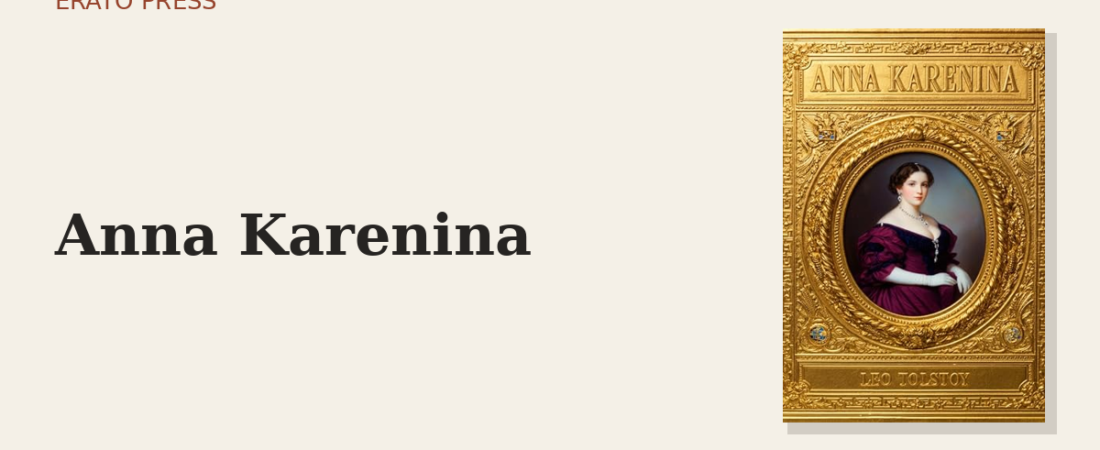

‘Anna Karenina’ is the name on the cover, and hers is the tragedy everyone remembers — the beautiful woman who leaves her husband for love and is destroyed by it. But Tolstoy built his novel on two rails, and the second story, running quietly alongside the doomed romance, is where he hid the meaning of the whole book.
While Anna moves toward the railway tracks, Konstantin Levin — awkward, searching, based openly on Tolstoy himself — moves the other way: out of the city and into the countryside, into marriage, fatherhood, work, and faith. In the novel’s most famous scene he mows a field of hay alongside his peasants for a whole day and loses himself in the labour, and finds in that self-forgetting a happiness that all Anna’s passion never gives her.
The book is an argument laid out in parallel: two ways of seeking meaning, one through romantic love and one through ordinary duty, and Tolstoy is honest enough to make Anna’s path the more thrilling and Levin’s the one that survives. To read only Anna’s story is to read half a masterpiece.
See our essay on Tolstoy and Dostoevsky for the two Russian visions of the self.
Read Anna Karenina — the Erato Press edition →
Enjoyed this piece?
Get the next one — our essays on the classics and news of each new Erato Press edition — straight to your inbox.