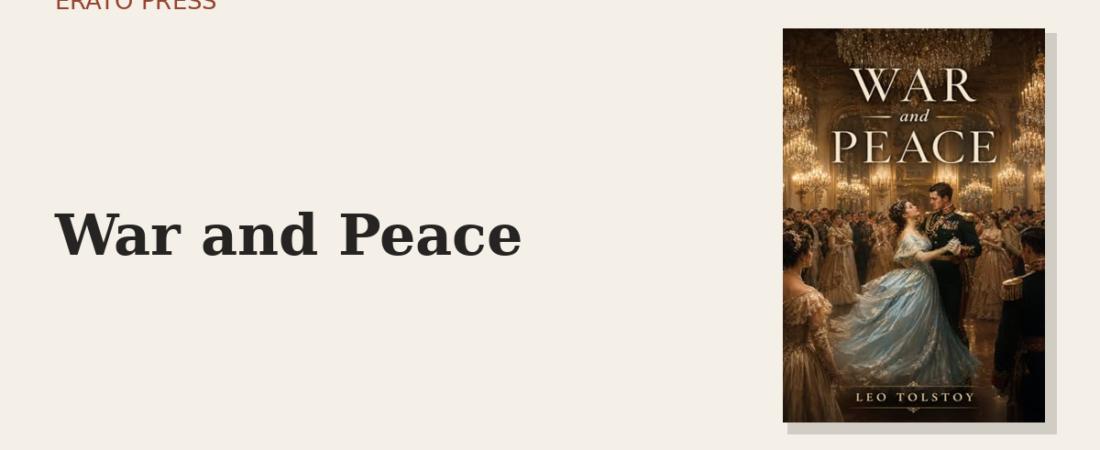

It is the book everyone owns and no one finishes — the byword for the unread masterpiece. But War and Peace is not hard. It is long, which is different, and the length is the point: Tolstoy wanted to hold an entire world in one book, and he nearly did.
A few honest tips. First, do not panic about the names — every Russian has three, and the aristocrats slip into French, but you will settle in within fifty pages and never be lost again. Second, feel free to skim the essays on history that Tolstoy wedges in near the end; even devotees do. What you must not skim is the life: Natasha at her first ball, Prince Andrei looking up at the sky after his wounding and seeing, for the first time, that the sky is enough; Pierre wandering the burning ruins of Moscow searching for the meaning of it all.
Because that is what the novel is: not a war book and not a peace book but a book about everything — birth, death, love, boredom, battle, marriage, faith — rendered with a truthfulness no other novel has matched. Read it not as a mountain to climb but as a life to live alongside these people. Give it a summer. It will give you back more than almost anything else you read.
See our Tolstoy vs Dostoevsky for where to go next.
Read War and Peace — the Erato Press edition →
Enjoyed this piece?
Get the next one — our essays on the classics and news of each new Erato Press edition — straight to your inbox.