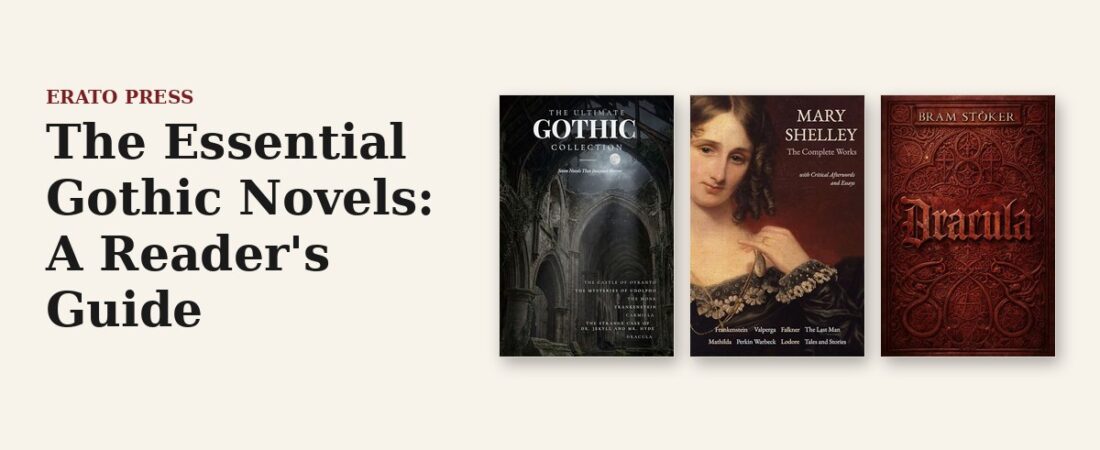
Short answer: Start with Frankenstein and Dracula — the two novels that built the modern imagination of horror — then go stranger with The King in Yellow. Gothic isn’t a genre of cheap scares; it’s the literature of what a culture represses, returning in the dark to be reckoned with.
What “Gothic” actually means
The Gothic is older and deeper than the haunted-house clichés it spawned. It was born on a single night in 1764, when Horace Walpole published The Castle of Otranto and claimed, falsely, to have found it in an old manuscript — fiction wearing the mask of a forged document, the genre’s founding gesture. From the start it was the mode in which a rational, progressive culture confronts everything it would rather not look at: death, desire, the body, the past, the irrational. Its castles and crypts are stage machinery; the real subject is always the return of the repressed. That’s why the great Gothic novels outlive their scares. They’re about us.
Begin with Frankenstein
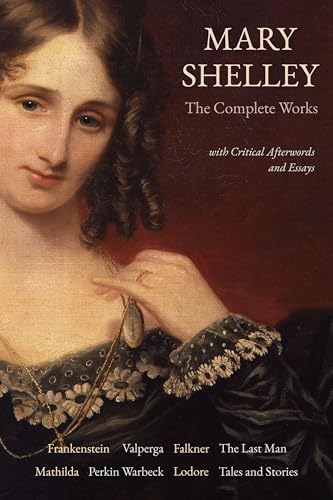
Mary Shelley’s 1818 novel is where the Gothic becomes modern — and where science fiction is born. A man builds life and abandons it, and the abandoned creature’s grief curdles into vengeance. It asks the question the next two centuries would not stop asking: what do we owe the things we make?
Read Frankenstein in the complete Mary Shelley →
Then Dracula
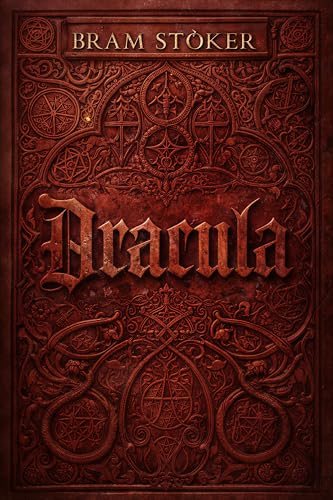
Stoker’s 1897 novel invented the vampire as we know him — aristocratic, contagious, erotic, foreign. Beneath the blood it’s a book about invasion and desire, the anxieties of an empire afraid of what it had pushed to its edges, told as a documentary assembly of letters and diaries that makes the impossible feel like evidence.
Read the Erato Press Dracula →
The eighteenth-century foundations
Once the two pillars have you, go back to the roots. After Otranto, Ann Radcliffe perfected the form’s machinery of suspense and “explained supernatural” in The Mysteries of Udolpho (1794) — the very book Jane Austen would gently mock in Northanger Abbey — and Matthew Lewis pushed it into outright transgression with the lurid, blasphemous The Monk (1796). These are the books that taught the genre what it was for. The most efficient way to read the whole foundation in one place is The Ultimate Gothic Collection, which gathers Otranto, Udolpho, The Monk, Frankenstein, Carmilla, Jekyll and Dracula in a single volume.
The fin-de-siècle and the divided self
The Victorians turned the Gothic inward, locating the monster inside the respectable man. Robert Louis Stevenson’s The Strange Case of Dr. Jekyll and Mr. Hyde (1886) made the double a household word; Oscar Wilde’s The Picture of Dorian Gray (1890) hid the rotting soul in an attic portrait; and Gaston Leroux’s The Phantom of the Opera (1910) gave the genre its definitive image of disfigured, doomed desire haunting the cellars of the modern city.
For the adventurous: weird fiction
By the 1890s the Gothic was mutating into something new. Robert Chambers’s The King in Yellow, built around a forbidden play that drives its readers mad, is the missing link between Poe and the cosmic horror of H. P. Lovecraft, whose tales are gathered in The Call of Cthulhu. This is where the Gothic stops being about haunted families and starts being about an indifferent universe — the same dread, pointed outward at the stars.
Get The Ultimate Gothic Collection →
Related reading: Dracula: How Bram Stoker Invented the Modern Vampire · Frankenstein: Mary Shelley and the Birth of Science Fiction · The King in Yellow and the Roots of Weird Fiction · Edgar Allan Poe: Where to Start
This article contains affiliate links. As an Amazon Associate, Erato Press earns from qualifying purchases.
Enjoyed this piece?
Get the next one — our essays on the classics and news of each new Erato Press edition — straight to your inbox.