Short answer: Raskolnikov, the murderer at the center of Crime and Punishment, is fiction’s most precise anatomy of a guilty mind. What makes him unforgettable isn’t that he kills — it’s that Dostoevsky shows the crime was never really about money or even about the victim. It was a theory the murderer had to test on his own soul, and the deepest thing the novel knows is that the theory’s first crime was committed before the axe ever fell: the act of thinking that turns a person into a louse.
The theory before the crime
Raskolnikov is a poor, proud, half-starved ex-student in St Petersburg who has talked himself into an idea: that humanity divides into the ordinary, who must obey the law, and the extraordinary — the Napoleons — who are permitted to step over it in the service of some greater historical purpose. Napoleon crossed rivers of blood, and the world calls Napoleon great; if the extraordinary man is defined by the willingness to transgress, then the transgression itself becomes the test of whether one is extraordinary. So Raskolnikov does not murder the old pawnbroker because he hates her, though he finds her repellent, and not really to rob her. He kills her to discover which kind he is: Napoleon or a louse. The genius of the novel is that the philosophy comes first and the axe second. The murder is an experiment, and Raskolnikov is both the scientist and the specimen.
The question itself is wrong
The answer the novel takes four hundred pages to deliver is not that Raskolnikov turns out to be too ordinary for greatness. It is that the question was wrong from the start. This is the deepest thing Dostoevsky understood about Raskolnikov’s theory — and about every theory that derives moral permission from historical consequence: it abstracts the human being on the other side of the axe into a symbol, a function, a step in an argument. The crime is not finally the killing. The crime is the act of thinking that converts a person into a louse. By the time the blow lands, the real violence has already been done, in the mind, in the reasoning that decided the pawnbroker’s life was a quantity to be weighed against a principle. The theory was about symbols and abstractions; the murder is about people, and people are not abstractions.
Lizaveta: the death the theory cannot explain
The novel makes this unforgettable with a single, unplanned detail. Raskolnikov had calculated only the pawnbroker’s death. But her gentle, simple-minded half-sister Lizaveta walks in on the scene, and he kills her too — on impulse, in panic, with no justification whatsoever in the theory that authorized the first murder. Lizaveta is exactly the kind of harmless, downtrodden person the theory was supposed to be improving the world for. Her death has no place in the argument. She is the accidental presence the calculation did not account for, the physical reality of blood that the abstraction could not foresee. After her, the theory never quite works again — not because Raskolnikov’s conscience rebels in the simple, expected way, but because the murder has revealed something in the act itself that cannot be theorized.
The manhunt that is really a soul-hunt
What follows looks like a detective story — the magistrate Porfiry circling, the evidence tightening — but the real pursuit is internal. Raskolnikov is not undone by police work; he is undone by his own mind, which begins to disintegrate under a guilt he refuses, intellectually, to feel. He faints, raves, returns compulsively to the scene, half-confesses to strangers, almost dares the authorities to catch him. And crucially, he does not stop believing his theory easily or at all quickly. He wrestles with it, defends it, revises it. It has the quality of every deeply held belief: it cannot be refuted by evidence, because it is capable of absorbing all evidence as confirmation. His suffering, his breakdown, even his strange pride and stranger abjection — the theory can explain all of it as the weakness of a man not yet extraordinary enough. The drama of the book is the war between what he believes and what he is, and belief does not lose that war by argument.
Sonia, and what finally refutes a theory
What refutes it is not an argument but a person. Sonia — the prostitute who has sold herself to keep her family alive, who reads the Gospel with the simplicity of someone for whom faith is not a theory but an empirical fact — is easy to mistake for a sentimental counterweight, the good woman whose love redeems the brilliant sinner. She is not that. She has done something every bit as objectionable as what Raskolnikov has done; she too has violated herself in the name of a necessity. But she has reached the opposite conclusion from her suffering — not because she is less intelligent, but because she does not think in theories, and has not used her suffering to justify anything. When he finally confesses the murder, she does not lecture him on morality. She asks: “What have you done to yourself?” The question is addressed not to his act but to his person — the exact question the theory could never ask, because it had already decided that the person was secondary to the principle.
Why he still terrifies us
Because Raskolnikov is not a monster. He is intelligent, capable of real tenderness, recognizably us — the kind of impoverished, isolated, over-theorizing young man the nineteenth century produced in quantity, and the twenty-first produces still. Dostoevsky’s genuinely frightening suggestion is that the path from a clever idea to an axe is shorter than we like to think, and that the ideologies which grant us permission to place ourselves above ordinary morality are among the most dangerous things human beings make. Written in the 1860s, the novel reads now like a prophecy of the century of theories and their corpses that followed. And yet Dostoevsky will not let it end in despair: Raskolnikov’s slow, grudging movement toward confession, and toward Sonia, is the book’s hard-won answer to its own nihilism — not a tidy redemption, barely a beginning, but the narrow door the whole novel has been looking for. To watch a mind break and then, faintly, start to mend is why people read Crime and Punishment and never forget it.
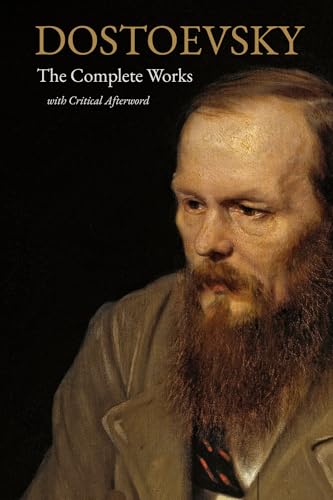
Meet Raskolnikov in the complete Dostoevsky →
Related reading: Where to Start With Dostoevsky · The Brothers Karamazov: Faith, Doubt, and the Grand Inquisitor · Russian Classics: Where to Begin
This article contains affiliate links. As an Amazon Associate, Erato Press earns from qualifying purchases.
Enjoyed this piece?
Get the next one — our essays on the classics and news of each new Erato Press edition — straight to your inbox.