Short answer: The Woman in White (1860) more or less invented the “sensation novel” — the Victorian thriller of secrets, false identities, and crimes hidden inside respectable families. But its real innovation was formal: Wilkie Collins built the suspense machine the modern thriller still runs on by making the discovery of truth, rather than its possession, the engine of the book. No one in it knows everything; the reader must assemble the truth from partial, biased testimony — and that, not the moonlit road or the villain, is why the novel still feels startlingly modern.
The midnight encounter that started a genre
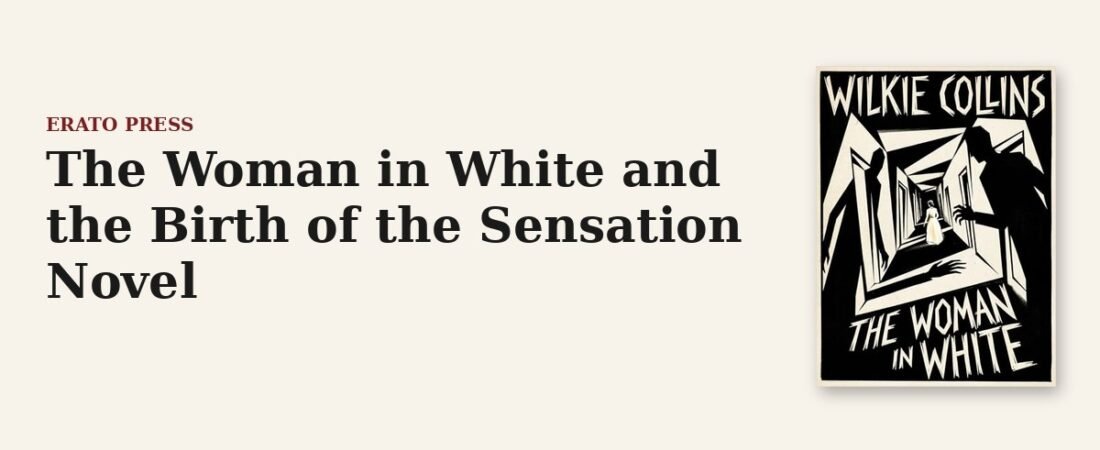
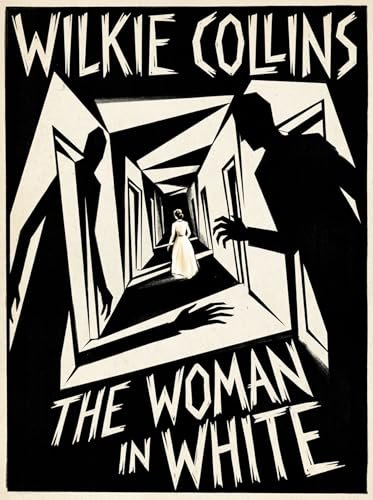
It opens with one of fiction’s great hooks. A young drawing-master, Walter Hartright, is walking a moonlit road outside London when a hand falls on his shoulder and a woman dressed entirely in white — escaped, terrified, hiding a secret — appears as if from nowhere. From that single image Collins spins a plot of stolen identity, a wrongful asylum confinement, a sinister baronet, and one of literature’s first great villains, the genial and monstrous Count Fosco. Readers in 1860 were obsessed; “Woman in White” bonnets, perfumes, and dances went on sale, and the serial drove its magazine’s circulation to extraordinary heights. But the hook is the least of it. What makes the novel endure is what Collins does with the next six hundred pages — and the strange, almost legal architecture he gives them.
The trick that made it modern
Collins’s masterstroke was structure. He tells the story not through a single omniscient narrator but through a sequence of documents and testimonies — Walter Hartright’s account, Marian Halcombe’s diary, letters, depositions, and statements from a dozen other hands — assembled, as the novel’s preface puts it, “as the story of an offence against the laws is told in Court by more than one witness.” Each narrator occupies a different position; each has access to different, incomplete information; each is shaped by self-interest and partial sight. The reader has to integrate these accounts to reach the truth, and the narrative structure itself enacts the difficulty of determining what actually happened. Understanding, the form insists, is never the gift of one authoritative voice — it has to be built, painstakingly, from fragments that do not quite agree.
This was genuinely radical in 1860, and it answered a deep Victorian anxiety. The age was one of epistemological vertigo: science kept revealing that settled understandings were wrong, the expansion of the empire kept producing knowledge that contradicted what England thought it knew, and the new professions of detection and journalism were built on the unnerving premise that the truth was hidden and had to be dug for. Collins turned that anxiety into a method. His multi-narrator technique also lets him show that knowledge is power — characters who possess certain information possess control over others — and, just as sharply, that knowledge is always limited, because no one narrator ever sees the whole. The technique runs straight to the modern thriller, to the epistolary horror of Dracula three decades later, and to every “found footage” and unreliable-narrator story since.
The sensation novel and its scandal
Collins and the writers who followed him — Mary Braddon, Ellen Wood — created a genre that horrified critics precisely because of where it located evil. Not in gothic castles abroad, not in some safely distant past, but in the English country house, inside the respectable family, behind the lace curtains of the comfortable middle class. The sensation novel whispered that the Victorian home was built over secrets — bigamy, madness, fraud, false identity, buried crimes — and that the danger was domestic and near. It was the literature of the skeleton in the wardrobe, and it terrified its readers because it pointed at them. The Woman in White set the template: the crime here is not a murder in a foreign castle but the quiet, legal theft of an Englishwoman’s identity and property, accomplished by men who move easily through drawing rooms.
The women at the center
The novel is also remarkable for its women, who are far more than the genre’s reputation for damsels would suggest. Marian Halcombe is one of the great female characters in Victorian fiction — intelligent, courageous, and willing to violate both social convention and legal restriction in pursuit of justice for her half-sister. She is the novel’s true detective. Yet Collins is honest about her limits: she is finally checked not by any failure of nerve but by illness and by the hard fact that a Victorian woman’s exertions had a physical and social ceiling. Laura Fairlie, who seems at first a mere victim acted upon by men, turns out to exercise real agency within her constraints — she resists her husband, and she escapes the asylum to which she has been criminally committed. And Count Fosco endures as one of literature’s great villains precisely because he is not simply evil: he is refined, intelligent, capable of genuine affection, a man of formidable gifts who has turned dangerous. Collins presents him with a kind of terrible fascination, and the reader’s reluctant admiration is part of the book’s unsettling power.
Why read it now
Because it is that rare thing — a foundational, historically decisive novel that is also a genuine page-turner: twisty, propulsive, and enormously fun. Collins believed, and proved, that popular entertainment and serious literary art are not opposed — that a single book can entertain, move, and enlighten at once. The architecture of suspense he builds here is not mere mechanical cleverness; it is a formal expression of how truth is actually discovered in a world of opacity and competing accounts, which is why his concerns feel so contemporary. If you love thrillers, this is where they were born — and reading it, you meet not just the origin of a genre but a sophisticated meditation on narrative, knowledge, and justice, inseparable from the pleasure of the story itself.
Read the Erato Press Woman in White →
Related reading: The Best Detective Fiction in the Classics · Hard-Boiled vs Cozy: The Two Souls of Crime Fiction · Dracula: How Bram Stoker Invented the Modern Vampire
This article contains affiliate links. As an Amazon Associate, Erato Press earns from qualifying purchases.
Enjoyed this piece?
Get the next one — our essays on the classics and news of each new Erato Press edition — straight to your inbox.