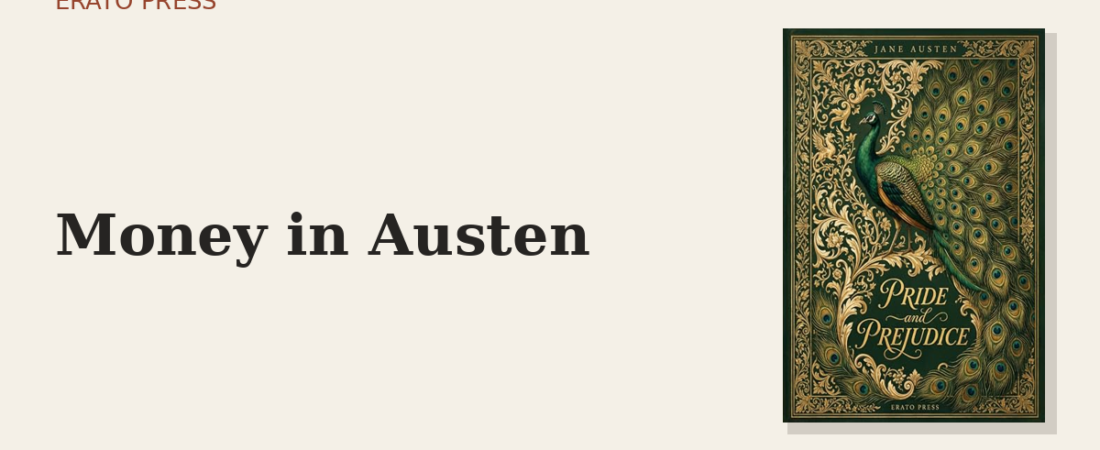

We read Pride and Prejudice as the greatest of love stories, and it is. But read it a second time with an eye on the numbers, and a harder novel appears underneath — one in which love is real but money is fate, and Jane Austen knows exactly how much everyone is worth to the pound.
Notice how often she tells us the figures. Mr Darcy has ten thousand a year; Mr Bingley, five; the Bennet girls will inherit almost nothing, because the estate is entailed away to a male cousin, and their mother’s terror of the hedgerow is not silly but rational. In a world that barred women from earning, marriage was the only career, and a bad one meant genuine ruin. When Charlotte Lucas marries the ridiculous Mr Collins, she is not a fool; she is a woman doing sensible arithmetic.
What makes Austen great is that she holds both truths at once. She lets Elizabeth refuse to marry for money — and also shows us, unblinking, the machinery that makes such a refusal a luxury. The romance is real; so is the cage. That double vision is the whole art.
Read on with Emma and Sense and Sensibility.
Read Pride and Prejudice — the Erato Press edition →
Enjoyed this piece?
Get the next one — our essays on the classics and news of each new Erato Press edition — straight to your inbox.