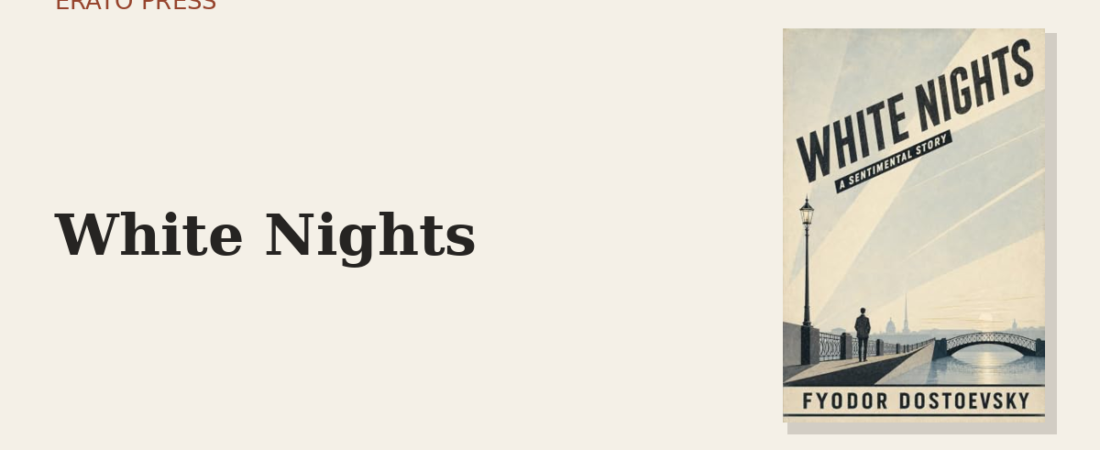

Of everything Dostoevsky wrote, White Nights is the tenderest and the saddest — a short, luminous novella about four nights in the pale summer twilight of St Petersburg, and a love that was never quite possible.
Its narrator is a shy young man he calls simply the Dreamer, one of those people who live more richly in imagination than in life, who walk the empty city at night and have conversations with houses. Then he meets Nastenka, a girl weeping on a bridge, waiting for a lover who may never come — and for four nights they talk, and he allows himself to hope, and we watch him fall knowing how it must end.
What makes it unbearable and beautiful is its generosity. The Dreamer is given one moment of real connection and then loses it, and his final words are not bitter but grateful: ‘a whole minute of bliss! Is that not enough for a lifetime?’ It is the most forgiving thing Dostoevsky ever wrote — the loneliness redeemed, just barely, by the memory of having loved.
It is the perfect way into Dostoevsky for a reader daunted by the great novels. Read on with Poor Folk and The Idiot.
Read White Nights — the Erato Press edition →
Enjoyed this piece?
Get the next one — our essays on the classics and news of each new Erato Press edition — straight to your inbox.