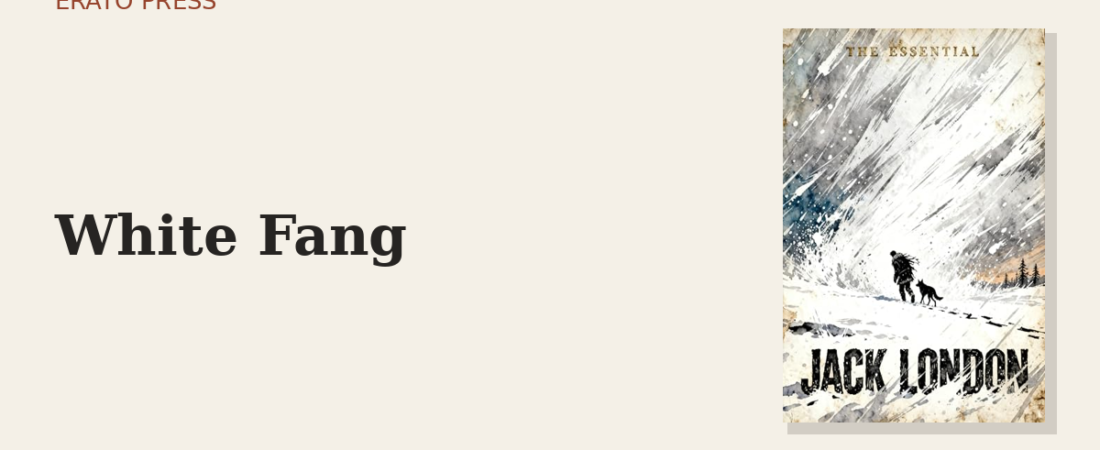

The Call of the Wild is the story of a tame dog who answers the pull of the wilderness and becomes a wolf. White Fang is its mirror image — the story of a wild wolf-dog who comes in from the cold and learns, painfully, to love. Jack London wrote them as a matched pair, two directions of the same great question about nature and civilization.
Born in the Yukon wild, White Fang knows only the law of fang and claw — kill or be killed, trust nothing. Passed from cruel master to crueller, made into a fighting animal, he becomes everything his brutal world has taught him to be. And then he is bought by a kind man, and London does something harder than any adventure: he shows, with total conviction, how love slowly, warily, remakes a creature built for violence. The wolf learns tenderness, and it costs him more courage than any fight.
London believed we are shaped by our environment more than our nature — that the same animal, raised in cruelty or kindness, becomes two different beings. White Fang is his argument in the form of a story that grips like a vice and, at the end, unexpectedly, breaks your heart.
This edition gathers it among the essential works of Jack London.
Read The Essential Jack London →
Enjoyed this piece?
Get the next one — our essays on the classics and news of each new Erato Press edition — straight to your inbox.