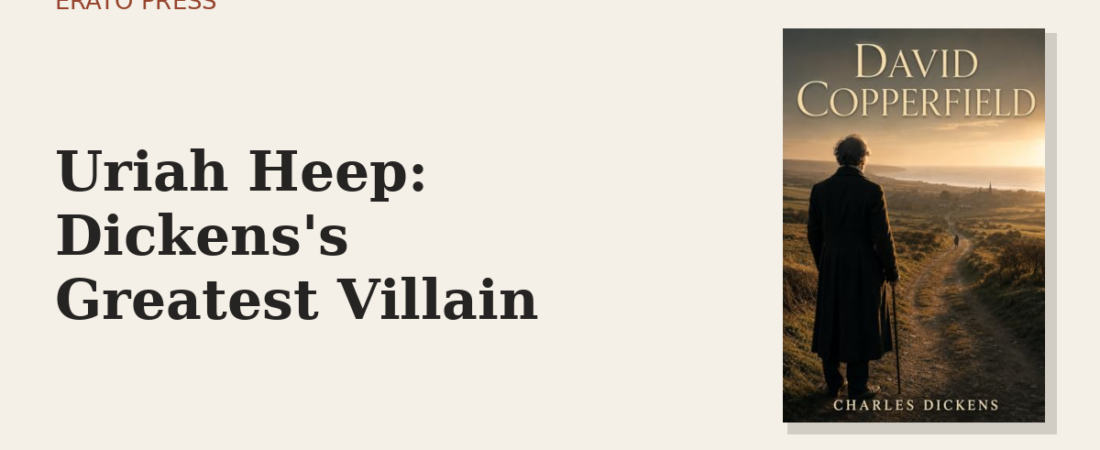

Uriah Heep introduces himself as ‘umble’ so often, and so performatively, that the word became a permanent addition to the English language for a very specific kind of false modesty — a man who insists on his own lowliness while quietly, methodically embezzling his way into control of his employer’s entire fortune and reputation.
Dickens gives him a genuinely disturbing physical presence — clammy hands, a habitual writhing posture — but the real horror is psychological: Heep has correctly identified that Victorian England rewards a performance of deference, and weaponized that performance so thoroughly that decent people mistake his cringing for harmlessness right up until it’s almost too late.
He’s the darkest supporting figure in what Dickens called, in his preface, his ‘favourite child’ among his novels — a book otherwise so tender toward its own hero that Heep’s cold calculation stands out even more starkly against it.
Enjoyed this piece?
Get the next one — our essays on the classics and news of each new Erato Press edition — straight to your inbox.