
In January 1776, an English immigrant who had failed at nearly everything published a pamphlet called Common Sense. Within months it had sold hundreds of thousands of copies in a country of three million people, and the argument for American independence — until then whispered by a few radicals — had become the common conviction of a nation. No writer has ever changed history faster, or with plainer words.
Thomas Paine’s genius was clarity. He wrote for the ordinary reader, not the lawyer, and he made the case for revolution feel like simple sense: that an island should not rule a continent, that a king was an absurdity, that people had the right to govern themselves. When the war went badly, it was Paine who rallied the freezing troops with The Crisis — ‘These are the times that try men’s souls’ — read aloud by Washington’s order before the crossing of the Delaware.
Then he did it again in France, and again against religion, and each time he paid for it. He was, as our edition’s subtitle says, the man destroyed not by changing his mind but by refusing to — hated at last by nearly everyone for the crime of consistency. He died poor and reviled, and only later did the world remember that he had helped invent it.
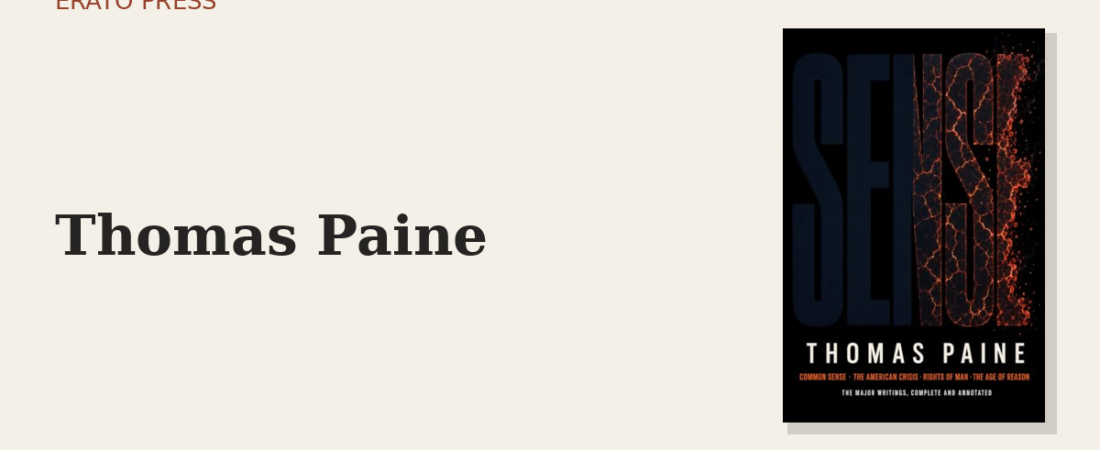
This volume gathers the major writings — Common Sense, Rights of Man, The Age of Reason, and more — the words that made two revolutions.
Read Thomas Paine: The Major Writings →
Enjoyed this piece?
Get the next one — our essays on the classics and news of each new Erato Press edition — straight to your inbox.