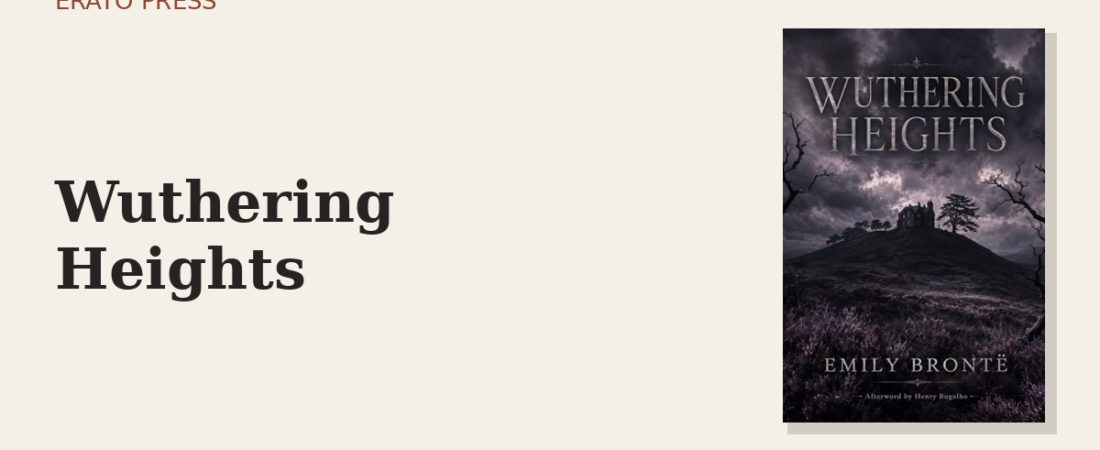

Readers come to Wuthering Heights for Heathcliff and Cathy, one of the fiercest love stories ever written — love, violence, and dissolution on the Yorkshire moors. But notice the structure Emily Brontë built, and a stranger design appears: there are two Catherines, and the novel is really about the second one undoing the ruin of the first.
The first Catherine — wild, selfish, doomed — makes the choice that destroys everyone: she loves Heathcliff with her whole soul (‘I am Heathcliff’) and marries someone else for status. Her betrayal poisons two families and turns Heathcliff into an engine of revenge that grinds on for a generation. She dies halfway through the book, and her hatred outlives her.
Then Brontë does something remarkable: she gives us a second generation, a second Catherine — the first one’s daughter — who repeats the situation and, this time, chooses differently, chooses tenderness over pride, and slowly heals the wound the first Catherine tore open. The novel is a diptych: passion that destroys, and the patient love that repairs the wreckage it leaves. Most readers remember only the first half. The genius is in the rhyme.
It is the strangest and most structurally daring of the Brontë novels.
Read Wuthering Heights — the Erato Press edition →
Enjoyed this piece?
Get the next one — our essays on the classics and news of each new Erato Press edition — straight to your inbox.