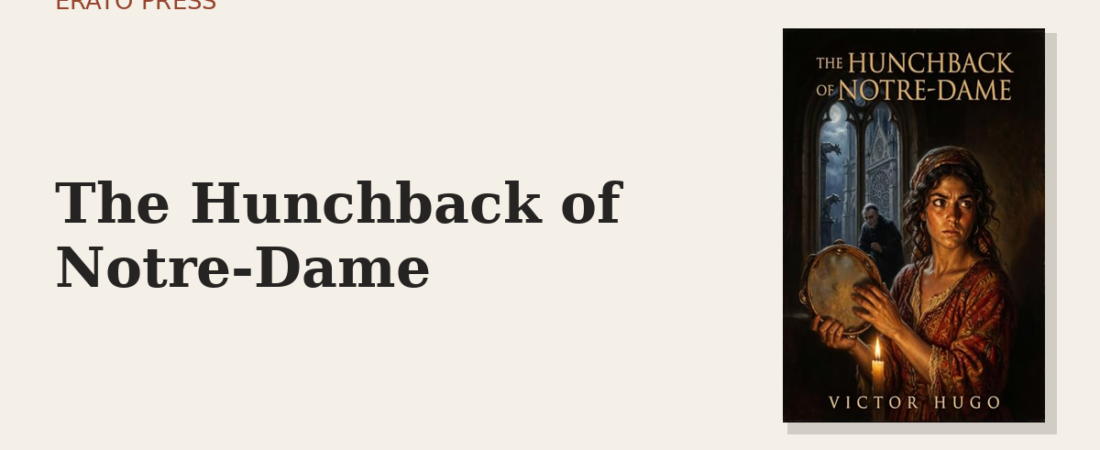

We remember it for Quasimodo, the deformed bell-ringer, and Esmeralda, the dancing gypsy girl. But the true hero of Victor Hugo’s The Hunchback of Notre-Dame is the building itself — the great cathedral, which Hugo loved so fiercely that he wrote the novel largely to save it.
In 1831, Notre-Dame was a crumbling ruin that Paris was ready to tear down. Hugo, appalled, made the cathedral the beating heart of a novel — its towers, its gargoyles, its shadows and heights the real setting of the tragedy — and its enormous success helped launch the movement that restored the building and gave us the Notre-Dame the world mourned when it burned in 2019. A novel, quite literally, saved a cathedral.
Around the stones Hugo spins a dark tale of doomed love and obsession: the innocent Esmeralda desired by three men — the twisted priest Frollo, the shallow soldier, and the monstrous, tender Quasimodo who alone loves her purely. It is Hugo at his most extravagant, cruel, and grand, a melodrama with the weight of myth. And like Les Misérables, it is finally about the crushing of the outcast by a pitiless society.
This edition gathers Hugo’s novels complete.
Read Victor Hugo: The Novels →
Enjoyed this piece?
Get the next one — our essays on the classics and news of each new Erato Press edition — straight to your inbox.