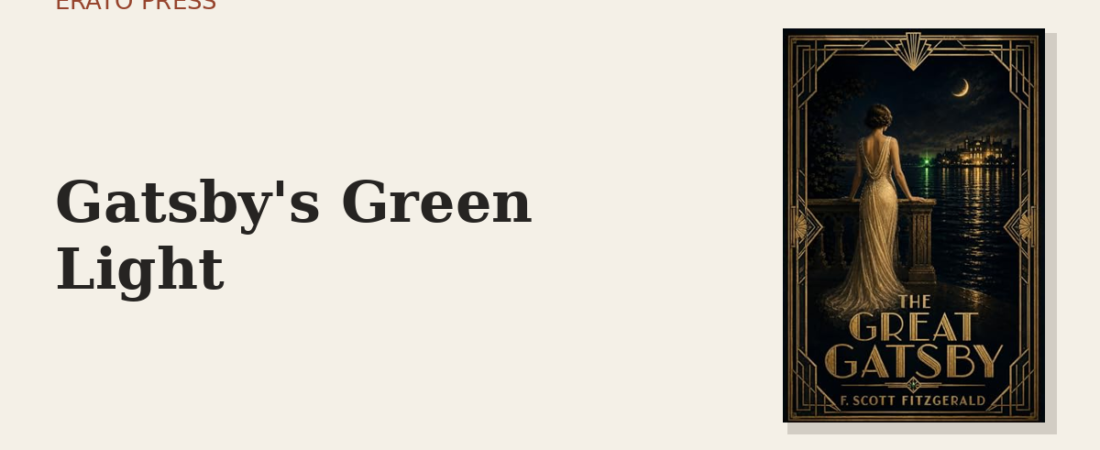

At the end of the first chapter, Jay Gatsby stands on his lawn and stretches his arms toward a single green light across the water. We have written about Fitzgerald beyond Gatsby; here let us stand on that lawn with him, because that green light is the most famous symbol in American literature, and it explains the whole country.
The light burns at the end of Daisy’s dock — the woman Gatsby loved and lost and has reinvented himself, criminally and completely, to win back. But the genius of the image is that Daisy is never really the point. Gatsby is not in love with a person; he is in love with a version of the past he intends to repeat, a dream of himself that a real woman can only disappoint. ‘Can’t repeat the past?’ he says, incredulous. ‘Why of course you can!’
That is the American tragedy Fitzgerald diagnosed: the belief that we can dream ourselves into being, that money can buy back time, that the green light is always just across the water. The novel’s last page turns Gatsby’s longing into the whole nation’s — boats against the current, borne back ceaselessly into the past.
It is the great American novel of yearning, and it fits in your pocket.
Read The Great Gatsby — the Erato Press edition →
Enjoyed this piece?
Get the next one — our essays on the classics and news of each new Erato Press edition — straight to your inbox.