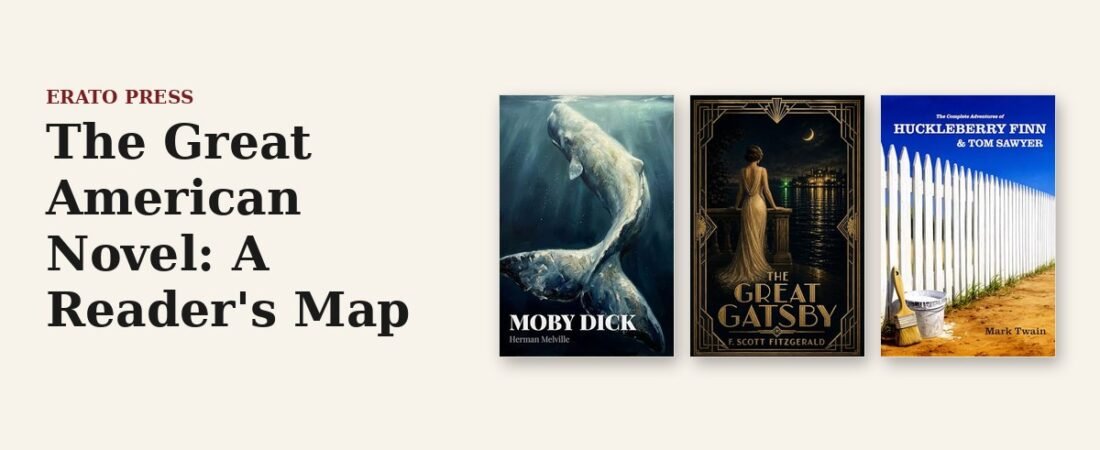
Short answer: There is no single “Great American Novel” — there are a handful of contenders, each capturing a different piece of the national soul: Moby-Dick (obsession and the cosmos), Huckleberry Finn (freedom and race), and The Great Gatsby (the dream and its corruption). Read these three and you have read the argument America has been having with itself for two centuries.
Why America needed a “Great American Novel”
The phrase itself tells you something. No one talks about the “Great French Novel”; the anxiety is distinctly American — the worry of a young, invented nation that it needed a book big enough to contain and explain it. The hunt for the Great American Novel is really the hunt for the nation’s self-definition, and the leading candidates each stake a different claim about what America fundamentally is. They do not agree, and that disagreement is the point: the country is an argument, and these are the books in which it is conducted at the highest level.
Moby-Dick: the American cosmos
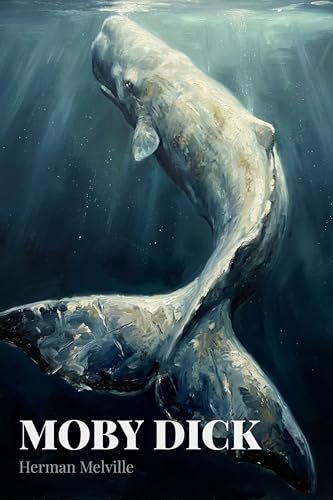
Melville’s whale-hunt is the most ambitious of them all — a sailor’s adventure that swells into a meditation on obsession, God, nature, and the limits of human will. Captain Ahab’s mad pursuit of the white whale is the American story of limitless ambition pushed to self-destruction, and the whale itself is a blank screen onto which every meaning and no meaning can be projected. Difficult, encyclopaedic, and overwhelming, it is the closest thing the country has to a national epic — a book that tries, almost insanely, to hold everything.
Read the Erato Press Moby-Dick →
Huck Finn and Gatsby: voice and dream
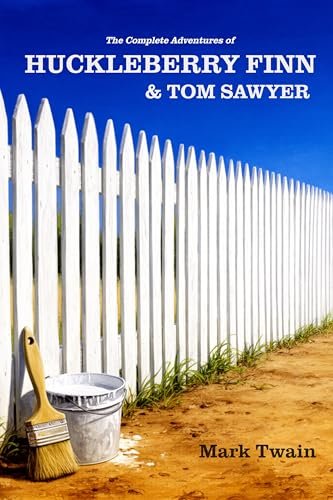
Twain’s Huckleberry Finn gave America its voice — the vernacular, the river, the runaway boy and the escaped slave whose friendship indicts a whole society — and with it a new way of telling truth through a narrator who does not understand what he is telling. Fitzgerald’s Gatsby gave it its great myth: the self-made man reaching for a dream that was always a mirage, narrated in prose so luminous it almost disguises how bleak the verdict is. Together they map the country’s hope and its hypocrisy — one looking back to the frontier, the other forward to the boom that would betray it.
Read Twain’s Huckleberry Finn → Read the complete Fitzgerald →
The other contenders
The shortlist does not end there. Hawthorne’s The Scarlet Letter is the great novel of the Puritan conscience from which so much of American guilt descends; Hemingway remade the American sentence and gave the disillusioned modern voice its form; Faulkner’s The Sound and the Fury pushed the form to its modernist limit in the broken voices of the American South. Each adds a chamber to the argument. None of them settles it — which is exactly why the question stays alive.
Where to start
If you read only one, read Gatsby for its perfection. If you read three, add Huckleberry Finn for its voice and Moby-Dick for its scale. Read all of them and you will not have found the Great American Novel — you will have understood why there can never be just one.
Related reading: Where to Start With Ernest Hemingway · A Farewell to Arms and the Lost Generation · F. Scott Fitzgerald Beyond Gatsby · Huckleberry Finn and the American Voice
This article contains affiliate links; as an Amazon Associate, Erato Press earns from qualifying purchases.
Enjoyed this piece?
Get the next one — our essays on the classics and news of each new Erato Press edition — straight to your inbox.