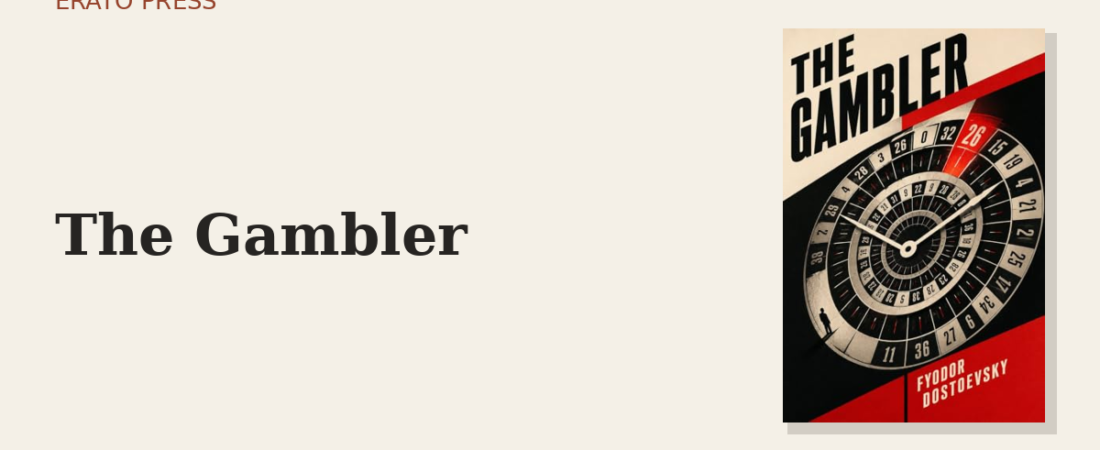

The story behind The Gambler is as extraordinary as the book. Trapped by ruinous debts, Dostoevsky signed a contract so brutal that if he failed to deliver a novel by a fixed date, his publisher would own the rights to everything he wrote for nine years. With the clock running out, he hired a young stenographer, dictated the whole novel in twenty-six days, married her a few months later — and made it, with hours to spare.
And the subject was the very thing destroying him: the roulette wheel. Dostoevsky was a compulsive gambler, and no one has ever written the addiction from the inside with such terrible authority. His narrator, Alexei, knows exactly how the wheel will ruin him and cannot stop; the sick thrill, the certainty that this spin will be different, the way the whole world shrinks to red or black — it is all there, felt rather than described.
Beneath the gambling is a study of the Russian character adrift in Europe, and of a love as compulsive and self-destructive as the roulette. It is short, feverish, and unforgettable.
Read it beside Notes from Underground — two portraits of the self at war with itself.
Read The Gambler — the Erato Press edition →
Enjoyed this piece?
Get the next one — our essays on the classics and news of each new Erato Press edition — straight to your inbox.