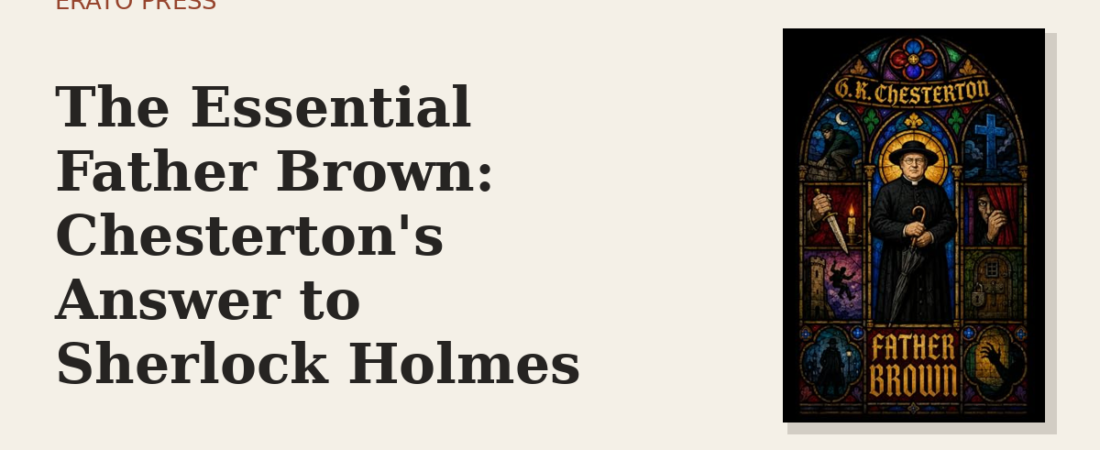

Chesterton built his detective as a deliberate rebuke to Holmes’s method. Father Brown is a small, unremarkable Catholic priest who solves crimes not through forensic observation but through an intimate, professional knowledge of sin — he has heard every variety of it in confession, and so recognizes a murderer’s psychology the way another man might recognize a familiar face.
It gives the stories a completely different texture from the Holmes canon: less interested in physical clues than in the moment a criminal’s self-justification cracks under quiet, unthreatening questioning. Brown routinely lets suspects underestimate him — a shabby little cleric with an umbrella — right up until he names them.
Chesterton, a devout convert himself, used the format to smuggle in an argument: that understanding evil requires having taken it seriously as a possibility within yourself, not studying it as a specimen from a comfortable distance.
Read The Essential Father Brown →
Enjoyed this piece?
Get the next one — our essays on the classics and news of each new Erato Press edition — straight to your inbox.