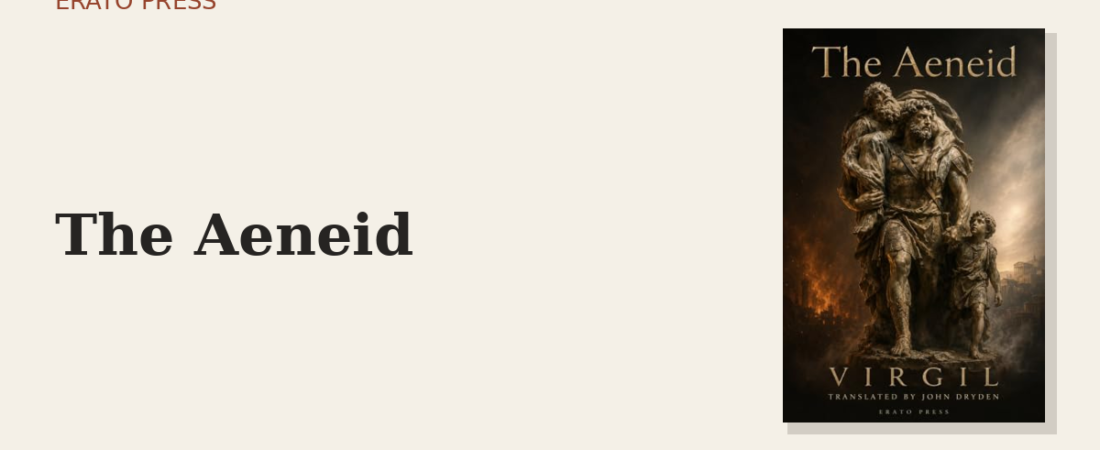

Homer sang of rage and of homecoming. Virgil, writing seven centuries later for the new empire of Augustus, sang of something colder and more grown-up: duty. The Aeneid is the epic of the man who does what he must, at the cost of everything he wants — and it is haunted, from first line to last, by the price.
Aeneas flees the ruins of fallen Troy carrying his old father on his back and leading his little son by the hand, charged by the gods to found the city that will become Rome. He is not a hero of glory like Achilles; he is a refugee and a builder, defined by the exhausting word pius — dutiful. And duty makes him abandon Dido, the queen of Carthage who loves him, sailing away while she builds her own funeral pyre. Rome is founded on that betrayal, and Virgil never lets us forget it.
That is the poem’s astonishing double vision. It is the official epic of Roman power — and also the most tender lament for everyone crushed beneath the wheels of that power, from Dido to the young warriors who die in the final books. Virgil praises the empire and grieves its cost in the same breath. The result is the saddest of the great epics, and the most modern.
See it within the epic tradition from Homer to Milton.
Read The Aeneid — the Erato Press edition →
Enjoyed this piece?
Get the next one — our essays on the classics and news of each new Erato Press edition — straight to your inbox.