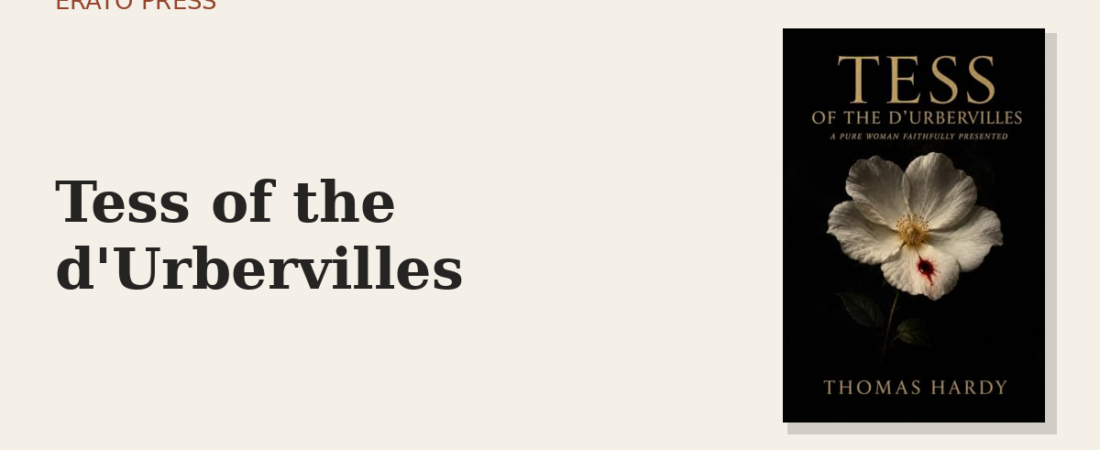

When Tess of the d’Urbervilles appeared in 1891, Thomas Hardy gave it a subtitle that scandalized Victorian England: ‘A Pure Woman.’ His heroine has been seduced — or raped; Hardy leaves it deliberately, damningly unclear — borne a child out of wedlock, and buried it. To call such a woman ‘pure’ was to declare war on the entire moral code of the age. That is exactly what Hardy meant to do.
The novel is a sustained fury against the double standard that ruins Tess. The man who wrongs her walks free and even turns preacher; the man who claims to love her abandons her on their wedding night for the very sin he has himself committed, because in a woman it is unforgivable and in a man it is a youthful lapse. Tess is destroyed not by any fault of her own but by a society that has one rule for men and another for women, and no mercy at all for the poor.
Hardy was so battered by the outrage that greeted Tess — and then Jude — that he gave up novels forever. But he had written one of the great protests in fiction: a book that dares to insist a ‘fallen’ woman was never the one who fell.
Read it within Hardy’s Wessex and beside the economics of womanhood in Austen.
Read Tess of the d’Urbervilles — the Erato Press edition →
Enjoyed this piece?
Get the next one — our essays on the classics and news of each new Erato Press edition — straight to your inbox.