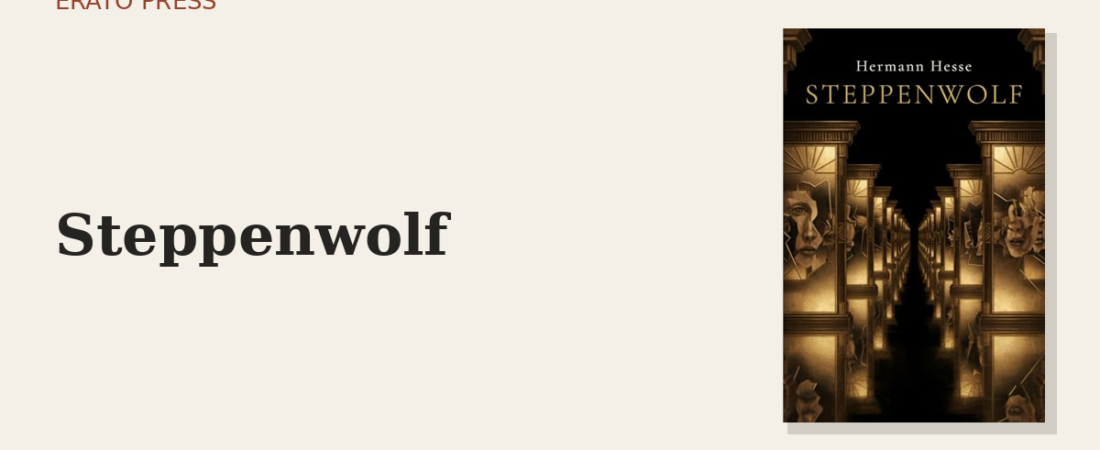

Every so often a novel becomes the secret handbook of a generation. Steppenwolf has done it twice — once for the disillusioned Europeans of the 1920s, and again for the seekers of the 1960s, who found in Hermann Hesse’s strange book a mirror for their own divided souls.
Harry Haller believes he is two beings in one body: a civilized man and a wild wolf of the steppes, the respectable citizen and the lonely outsider who despises everything the citizen loves. He is middle-aged, suicidal, contemptuous of the comfortable world — until a mysterious woman and a ‘Magic Theatre’ teach him that the truth is stranger than his tidy division. He is not two selves but a hundred; the self is not a fixed thing but a crowd, and the cure for his despair is to stop taking himself so seriously.
Hesse wrote it in his own midlife crisis, and it remains the great novel of that particular pain: the intelligent, sensitive person who feels too good for the world and too weak to leave it. Its final lesson — learn to laugh, learn to play, learn that you contain multitudes — is why it keeps being rediscovered by each new set of the lost.
Read it beside Notes from Underground, the other great book of the divided modern self.
Read Steppenwolf — the Erato Press edition →
Enjoyed this piece?
Get the next one — our essays on the classics and news of each new Erato Press edition — straight to your inbox.