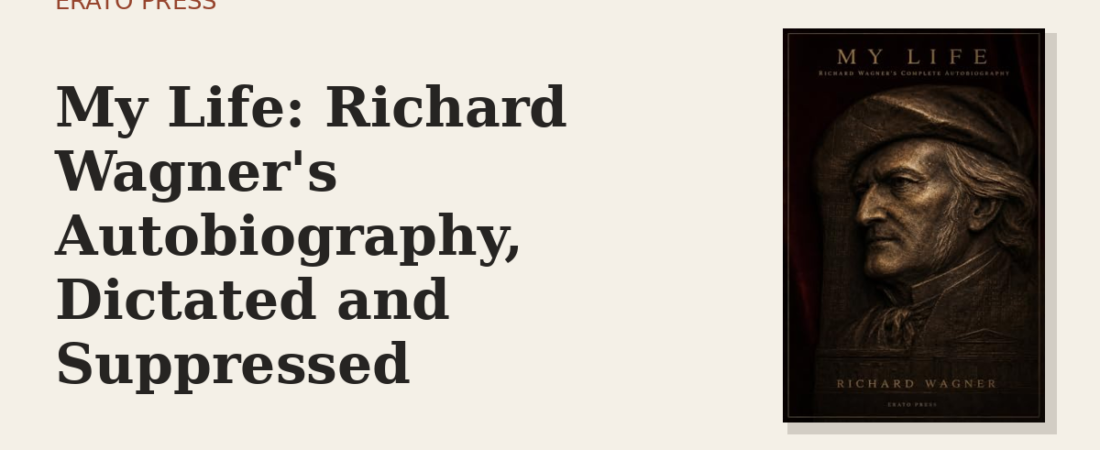

Wagner didn’t write his autobiography; he performed it, dictating it aloud to his mistress and future wife Cosima over years, shaping his own legend in real time for an audience of one before it ever reached the page. The manuscript was then printed in a tiny private edition, intended only for patrons close enough to be trusted with it — and Wagner spent the rest of his life quietly buying back and destroying any copy that escaped.
What survives is a self-portrait by a man who understood myth-making as well as he understood music: the poverty rewritten as destiny, the debts and scandals softened, the rivals diminished. It is unreliable in exactly the way a composer’s account of his own genius should be unreliable, and fascinating for the same reason.
Erato Press reunites the complete 1813–1864 narrative in one volume, with the critical apparatus needed to read Wagner’s self-portrait against the historical record he was so carefully editing.
Enjoyed this piece?
Get the next one — our essays on the classics and news of each new Erato Press edition — straight to your inbox.