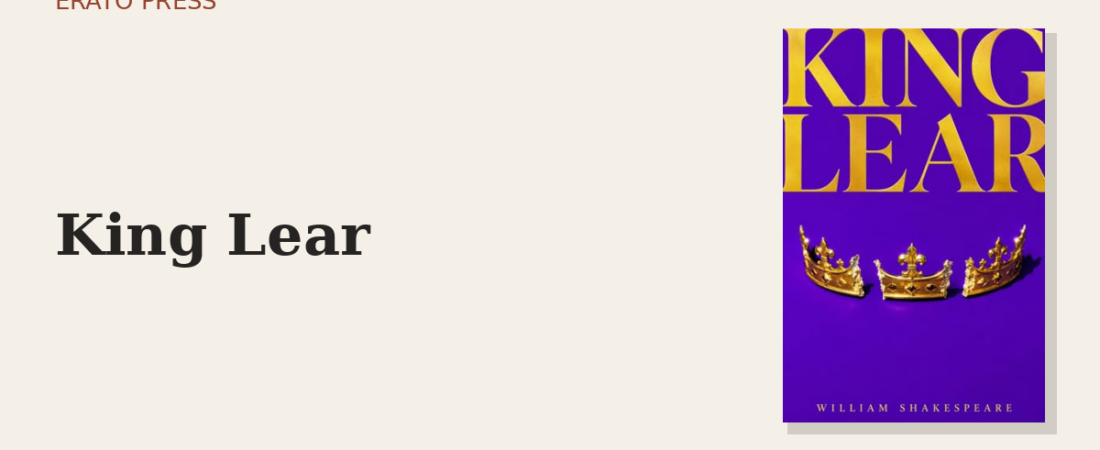

Many readers think King Lear is Shakespeare’s greatest play, and many cannot bear to read it twice. It is the bleakest thing he wrote — a vision of a universe with no justice in it, where the good are tortured and the innocent hanged and the heavens stay silent.
An old king decides to divide his kingdom among his daughters according to how much they flatter him. The two who lie prosper; the one who tells the plain truth is disinherited. From that single act of vanity the whole world comes apart: madness on the heath, an old man howling in the storm, a father blinded, a daughter’s corpse in her father’s arms. ‘Nothing will come of nothing,’ Lear tells Cordelia — and the play spends five acts proving how much can come of it.
What redeems the darkness is that Lear, stripped of everything, at last learns to see. The king who never noticed the poor, houseless in the storm, finally feels what wretches feel. Wisdom comes, but only at the cost of everything, and too late to save anyone. That is the terrible arithmetic of the play.
Read it with Macbeth and Othello to complete Shakespeare’s descent into the great tragedies.
Read King Lear — the Erato Press critical edition →
Enjoyed this piece?
Get the next one — our essays on the classics and news of each new Erato Press edition — straight to your inbox.