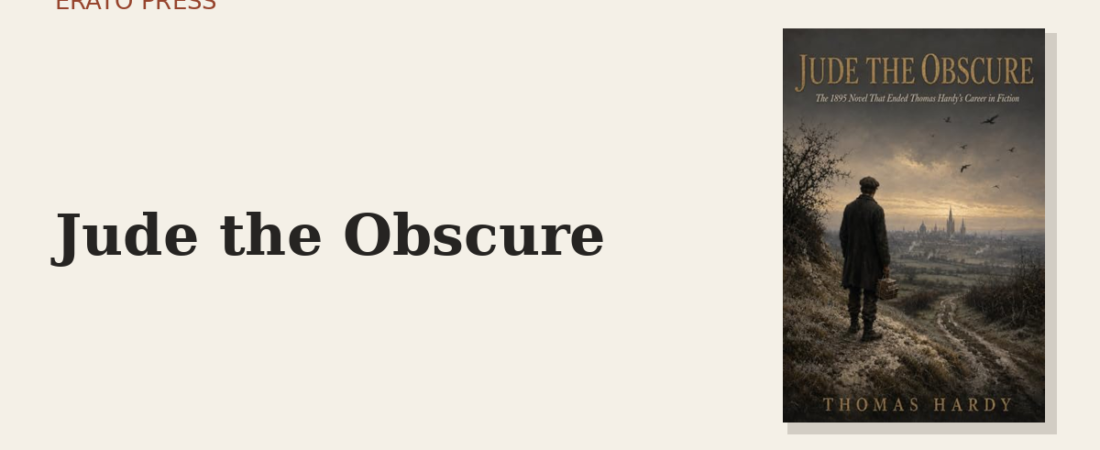

When Jude the Obscure appeared in 1895, a bishop burned it, the reviewers called it filth, and Thomas Hardy — sickened by the outcry — never wrote another novel. It is his angriest, bleakest, most modern book, and the price he paid for it was his career in fiction.
Jude Fawley is a poor stonemason who dreams of the university at Christminster — Hardy’s Oxford — and is shut out of it by class and circumstance and his own passions. He loves the free-thinking Sue Bridehead, and the two of them try to live and love outside the rules of marriage and church, and society destroys them for it. The novel is a sustained assault on the institutions of the age — marriage, the class system, the closed doors of education — and it does not offer the consolations that even Tess allowed.
What scandalized the Victorians is exactly what makes it feel written yesterday: its insistence that people should be free to love, to learn, and to leave a marriage that has become a cage. Hardy looked at the machinery that crushes ordinary aspiration and refused to look away, and refused to pretend it ends well.
Read it as the dark twin of Far from the Madding Crowd — the same county, all the mercy withdrawn.
Read Jude the Obscure — the Erato Press edition →
Enjoyed this piece?
Get the next one — our essays on the classics and news of each new Erato Press edition — straight to your inbox.