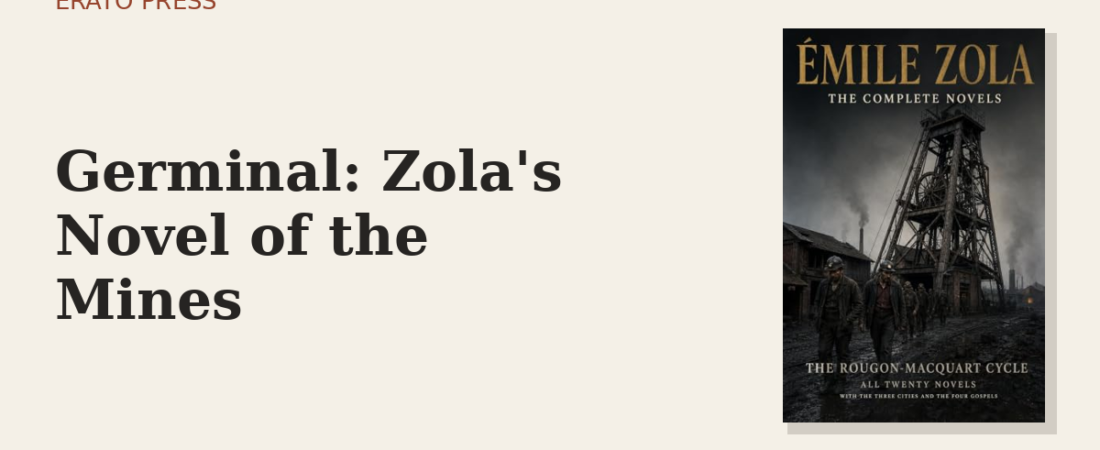

Zola spent weeks underground researching Germinal, and it shows in every claustrophobic page: the coal dust, the collapsing tunnels, the miners’ children sent down the shaft as soon as they’re old enough to work a ventilation door. It is the most political novel of the Rougon-Macquart cycle, built around a strike that spirals from a wage dispute into something closer to a small war between starving workers and the company that owns the ground beneath their town.
What keeps it from becoming a simple tract is Zola’s refusal to make either side comfortable: the strike’s idealistic organizer is also, in his own way, feeding off the workers’ desperation, and the violence that erupts destroys the innocent alongside the guilty in a way no ideology fully accounts for. It ends less with victory than with a single, stubborn image of green shoots pushing up through the ruined earth.
It sits inside the Rougon-Macquart cycle as its angriest volume — the one where Zola’s clinical method finally can’t stay clinical.
Read Émile Zola: The Complete Novels →
Enjoyed this piece?
Get the next one — our essays on the classics and news of each new Erato Press edition — straight to your inbox.