
A century before NASA, Verne’s Baltimore Gun Club decides, mostly out of post-war boredom, to build a cannon large enough to fire three men to the Moon — and Verne does the arithmetic seriously enough that his projected launch site, muzzle velocity, and even the three-man crew size all turned out startlingly close to Apollo 11’s actual mission a hundred years later.
The novel is less interested in what the travelers find on arrival — that’s left, cheekily, for a sequel — than in the sheer civic mania of the launch itself: the fundraising, the engineering arguments, the crowds. Verne understood, decades before anyone had left the atmosphere, that a moon shot would be as much a spectacle of national ego as of science.
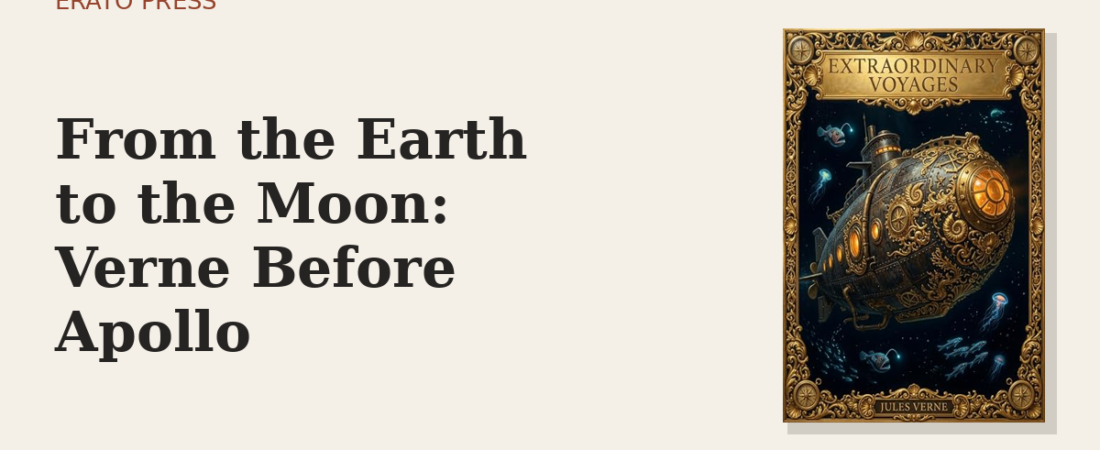
Paired with the journey downward in the same volume, it completes Verne’s instinct for sending readers to every extreme his century’s geography still had left to offer.
Enjoyed this piece?
Get the next one — our essays on the classics and news of each new Erato Press edition — straight to your inbox.