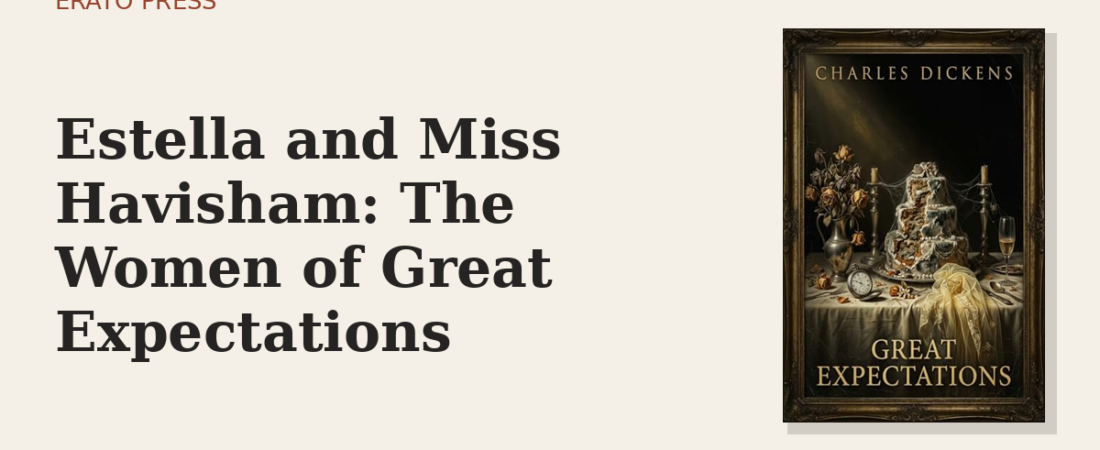

Miss Havisham has stopped every clock in Satis House at the exact moment she was jilted at the altar, still wears her wedding dress decades later, and has raised her adopted daughter Estella for one explicit purpose: to break men’s hearts as revenge for her own. It is one of the most extreme portraits of grief curdled into cruelty in Victorian fiction.
Estella is, in a sense, Miss Havisham’s most successful and most tragic creation — a girl trained so thoroughly to withhold feeling that by adulthood she genuinely can’t locate any warmth in herself to give Pip, even when she seems to want to. Dickens makes her cruelty legible as damage rather than villainy, which is what makes the novel’s ending, in both its published and unpublished versions, so genuinely uncertain.
Between them, they complicate Pip’s own story of ambition — proof that Dickens’s sharpest observations about class and self-invention in this novel aren’t only about its narrator.
Enjoyed this piece?
Get the next one — our essays on the classics and news of each new Erato Press edition — straight to your inbox.