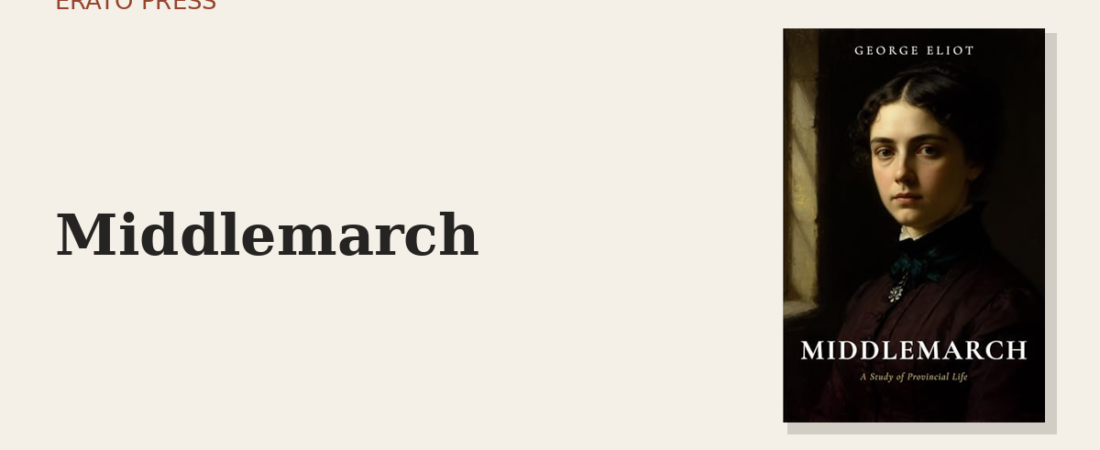

Virginia Woolf called Middlemarch ‘one of the few English novels written for grown-up people,’ and its greatness begins with a mistake — the wrong marriage that George Eliot places at the centre of the book, and treats with a wisdom no other novelist has quite matched.
Dorothea Brooke is young, ardent, hungry to do something great with her life. And so she marries Casaubon — a dry, elderly scholar she mistakes for a great mind, imagining she will devote herself to his life’s work. The horror of the marriage is that nothing dramatic goes wrong; it is simply, slowly, a tomb. Casaubon’s great work is worthless, and he knows it, and cannot bear her pity. Eliot watches two people fail to reach each other with a compassion that never flinches and never condemns.
What makes the novel wise rather than merely sad is Eliot’s refusal to take sides. Even Casaubon, cold and jealous, is granted his inner suffering; even a bad marriage is shown from both prisoners’ cells. The book’s famous moral is that we are all locked in our own point of view, and that growing up means learning, painfully, that other people are as real as we are.
Read it beside Austen’s Emma — two studies of a clever woman learning to see.
Read Middlemarch — the Erato Press edition →
Enjoyed this piece?
Get the next one — our essays on the classics and news of each new Erato Press edition — straight to your inbox.