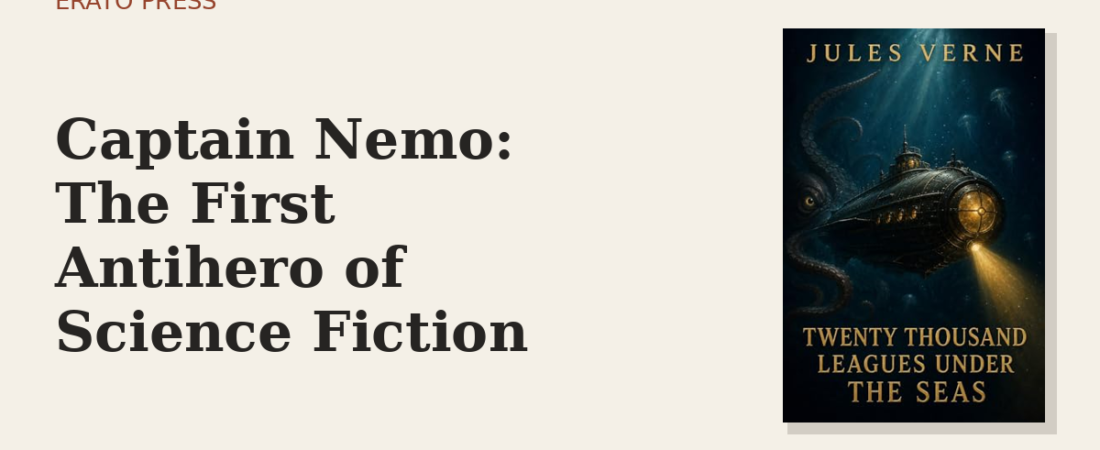

Nemo never explains himself, and that refusal is the most modern thing about him. He builds the most advanced machine on Earth, names it after a nautilus, and uses it to disappear entirely from the nations that made him — hoarding a hatred so total that Verne never even lets the reader learn its cause until a much later novel, and even then only partially.
He is not the noble explorer that adaptations have often flattened him into. He’s a self-exiled aristocrat, possibly a dispossessed prince, funding a private war against empire from beneath the sea, and Aronnax — the naturalist who narrates the book — never fully decides whether he is being rescued or held prisoner by a genius he can’t help admiring.
That ambiguity is what separates Verne’s book from a century of adventure fiction it inspired, including the machine itself, which is easier to love without reservation than the man who built it.
Read Twenty Thousand Leagues Under the Seas →
Enjoyed this piece?
Get the next one — our essays on the classics and news of each new Erato Press edition — straight to your inbox.