Latest posts
-
Guy de Maupassant: The Master of the 200-Word Twist
The Erato Press edition Maupassant wrote nearly three hundred short stories in a career that lasted barely a decade before syphilis destroyed his mind, and he did more than almost any writer in any language to prove that a short story could carry the emotional weight of a novel in a fraction of the pages.…
-
Germinal: Zola’s Novel of the Mines
The Erato Press edition Zola spent weeks underground researching Germinal, and it shows in every claustrophobic page: the coal dust, the collapsing tunnels, the miners’ children sent down the shaft as soon as they’re old enough to work a ventilation door. It is the most political novel of the Rougon-Macquart cycle, built around a strike…
-
The House of the Dead: Dostoevsky’s Novel of the Labor Camp
The Erato Press edition Before he wrote a word of the great novels, Dostoevsky spent four years in a Siberian prison camp — sentenced to death for reading banned political texts, reprieved at the literal last moment in front of a firing squad, and shipped east in chains instead. The House of the Dead is…
-
James Oliver Curwood: Twenty-Two Novels of the Wild North
The Erato Press edition Curwood was, for a stretch of the 1920s, one of the best-selling authors in America, and he is now one of the most completely forgotten. His novels are set almost entirely in the Canadian and Alaskan wilderness he genuinely explored as a conservationist, and his real innovation was giving animals —…
-
Eugénie Grandet: Balzac’s Miser and His Daughter
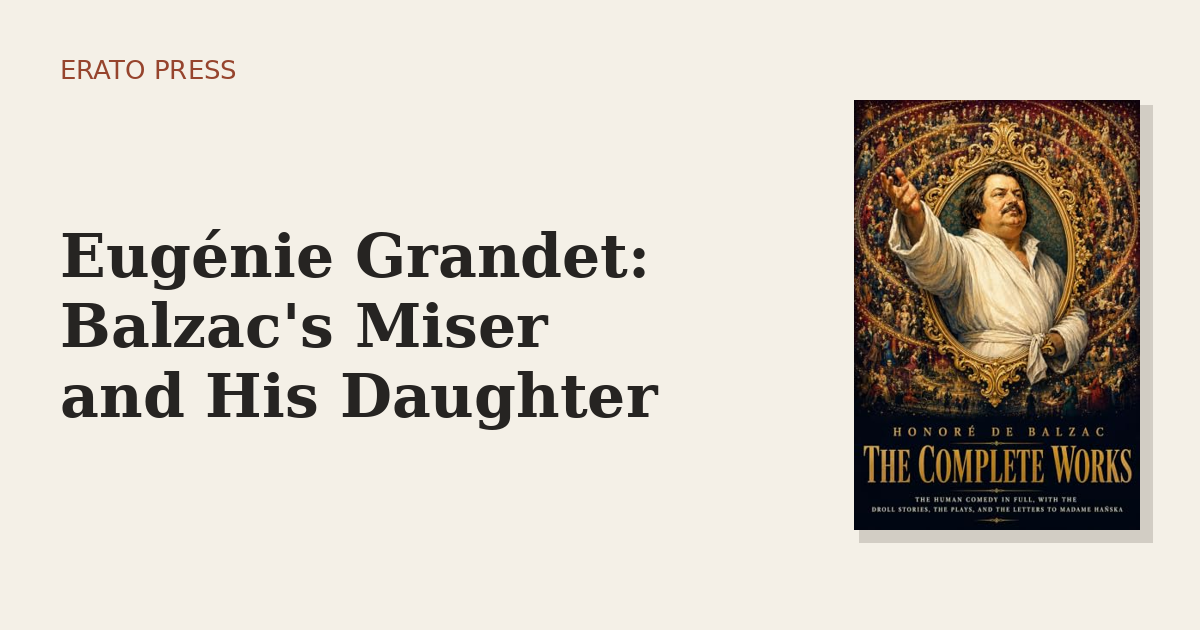
The Erato Press edition Old Grandet is one of the great misers of literature, richer than anyone in his provincial town suspects and incapable of spending a franc he doesn’t have to — but Balzac’s real subject is his daughter Eugénie, who inherits both his fortune and, more quietly, his capacity for a single fixed…
-
Oedipus the King: The Man Who Solved Every Riddle But His Own
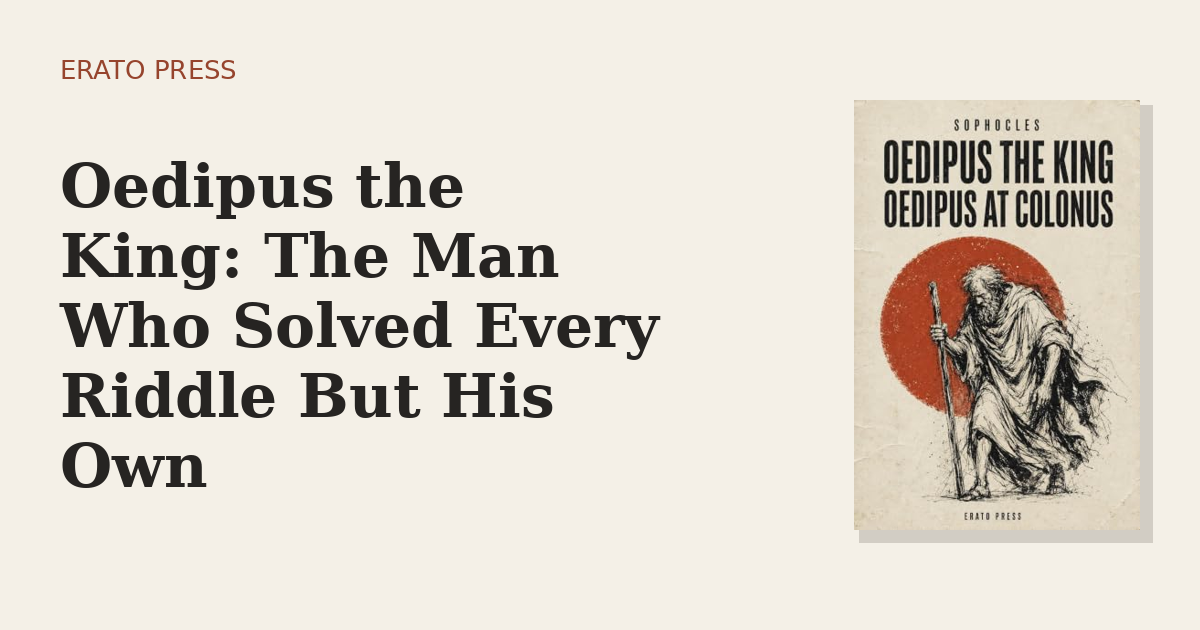
The Erato Press edition The dramatic irony of Oedipus the King is total and, on rereading, almost unbearable: Oedipus, the man who saved Thebes by solving the Sphinx’s riddle, spends the entire play investigating a murder he himself committed, hunting a curse on the city that he himself embodies, and the audience — who already…
-
The Murder of Roger Ackroyd: The Twist That Changed Crime Fiction
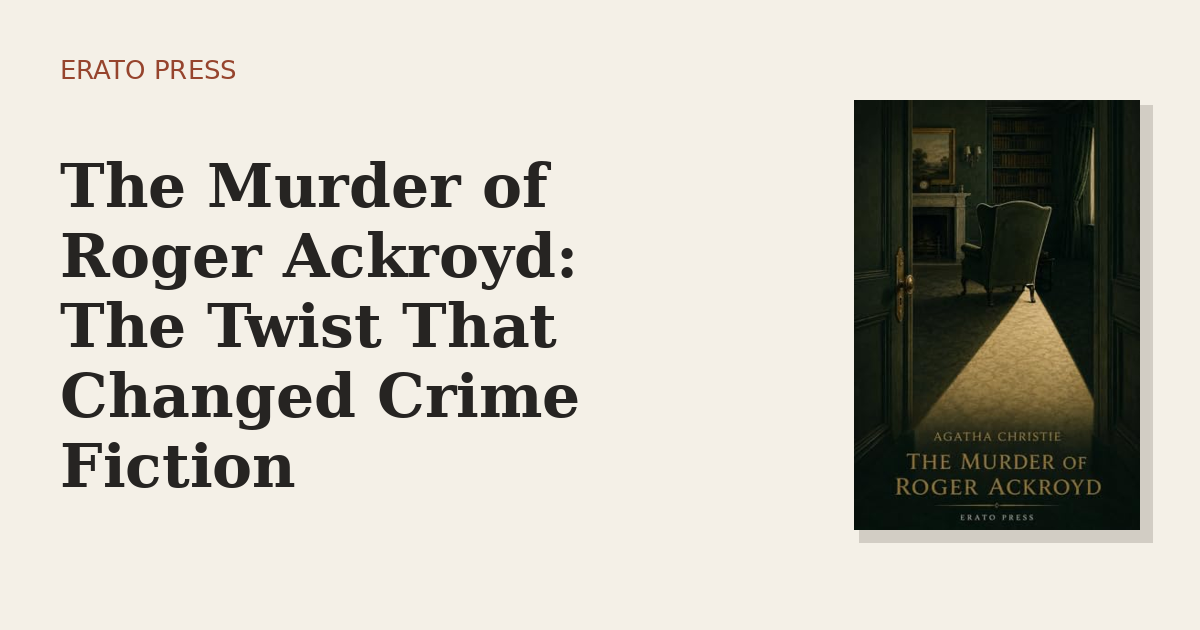
The Erato Press edition When Agatha Christie published The Murder of Roger Ackroyd in 1926, some critics accused her of cheating. The novel is narrated by Dr. Sheppard, a seemingly trustworthy village physician who assists Poirot’s investigation from the first page — and the entire mystery genre’s unwritten contract with the reader had, until then,…
-
Renfield and Van Helsing: Dracula’s Two Extremes
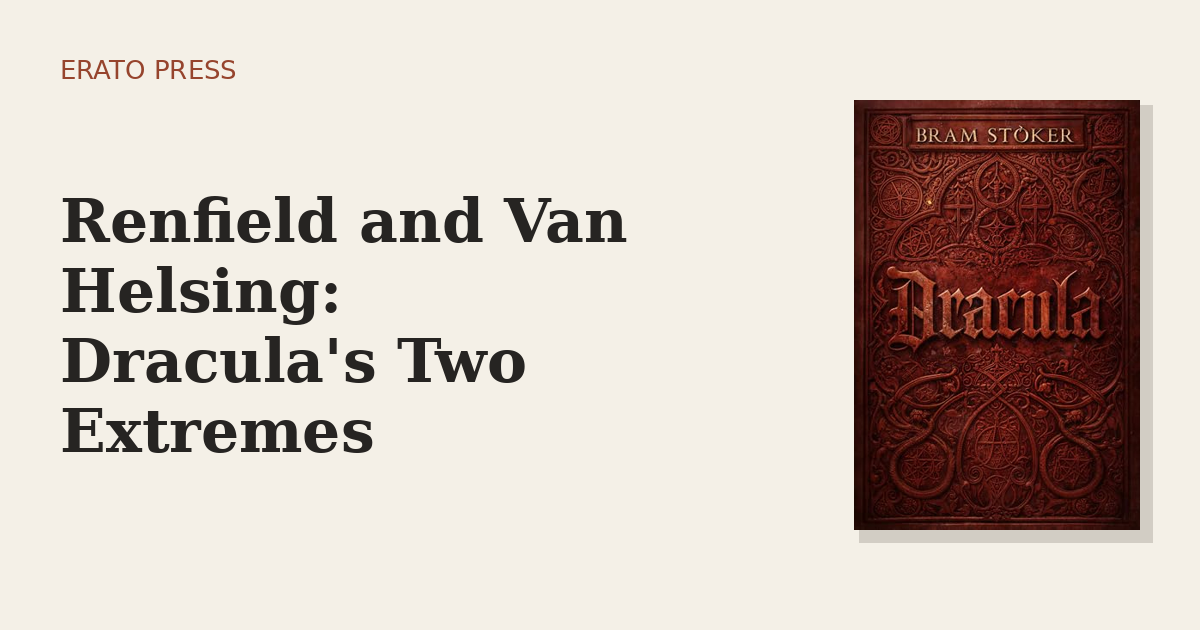
The Erato Press edition Stoker builds Dracula around a pair of characters who understand the vampire long before anyone else does, and neither is believed for most of the novel because of how they understand it. Renfield, locked in an asylum, has already fallen partly under Dracula’s psychic influence and eats flies and spiders to…
-
Journey to the Center of the Earth: Verne’s Underground Epic

The Erato Press edition Professor Lidenbrock decodes a runic cipher hidden in a medieval manuscript and concludes, against all geological sense, that it’s a map to the center of the Earth via an Icelandic volcano. Verne knew the science was implausible even in 1864 — he includes a prehistoric ocean, giant mushroom forests, and living…
-
The Beautiful and Damned: Fitzgerald Before Gatsby
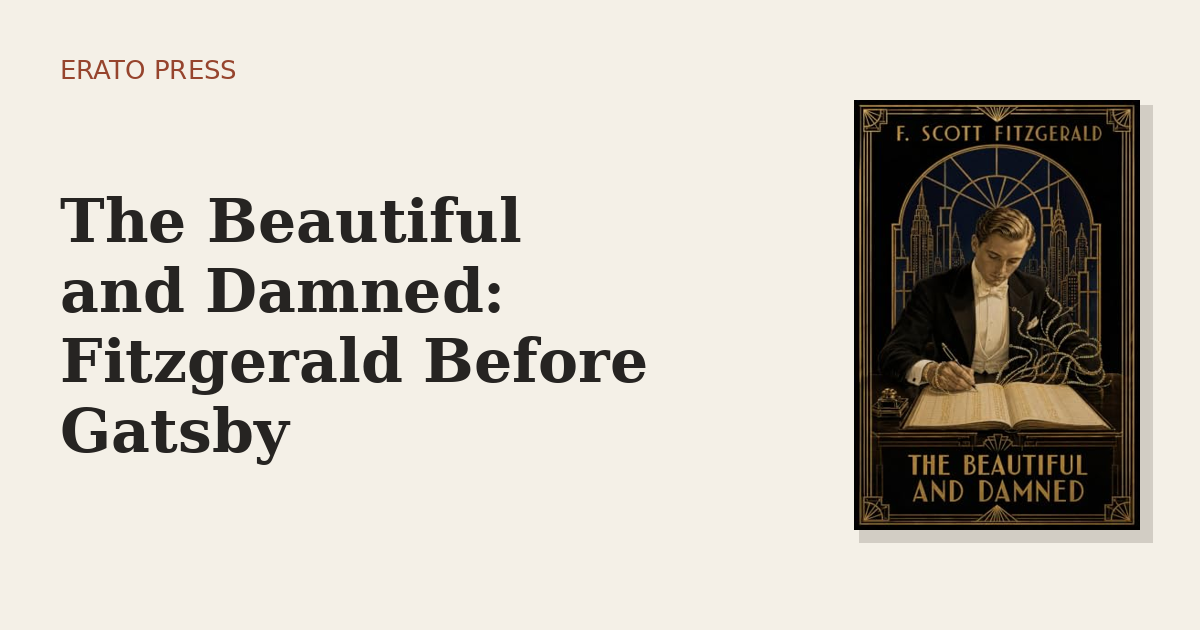
The Erato Press edition Three years before Gatsby, Fitzgerald wrote a novel about a beautiful young couple who inherit no fortune, only the expectation of one, and slowly destroy themselves waiting for a rich grandfather to die. Anthony and Gloria Patch don’t have Gatsby’s tragic grandeur; they have something closer to the truth of what…