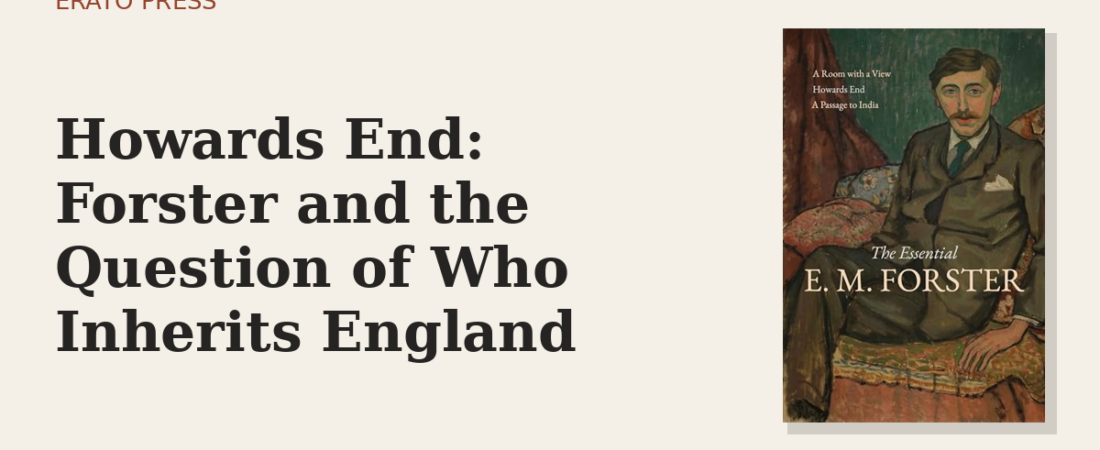

‘Only connect’ is the epigraph and the argument of Howards End: Forster’s attempt to bridge England’s widening class divide through the Schlegel sisters — cultured, progressive, and comfortably wealthy — and the Wilcoxes, a family of unreflective, effective businessmen who actually run the country’s institutions while barely thinking about them.
The house at the novel’s center, modeled on Forster’s own childhood home, becomes a stand-in for England itself: who deserves to inherit it, who understands its history, who will simply occupy it without ever truly seeing it. The tragedy running underneath the comedy of manners is Leonard Bast, a striving young clerk crushed almost casually by both families’ carelessness — Forster’s reminder that his novel of ideas has real economic victims.
It sits alongside A Room with a View’s gentler Edwardian romance in this collection, but with far sharper teeth.
Read The Essential E.M. Forster →
Enjoyed this piece?
Get the next one — our essays on the classics and news of each new Erato Press edition — straight to your inbox.