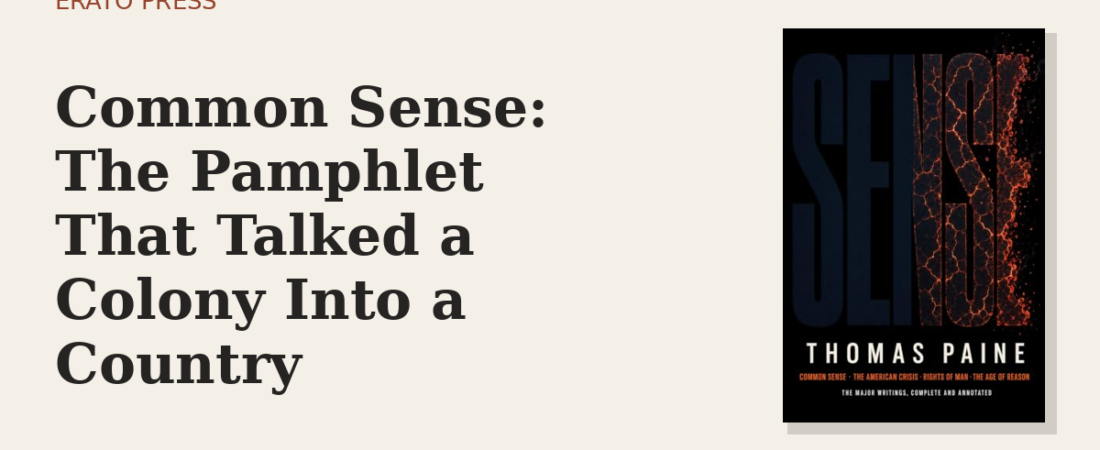

In January 1776, most American colonists still wanted reconciliation with Britain, not independence. Common Sense sold roughly 500,000 copies in a colonial population of about 2.5 million — a rate of penetration modern publishing has never matched — and did more than any single document to move public opinion from grievance to revolution in a matter of months.
Paine’s trick was tone: where other political writing of the period was addressed to educated elites in formal, Latinate prose, Paine wrote in plain, furious, accessible English, aimed squarely at ordinary readers, tavern-goers, and farmers who had never been spoken to as political thinkers before. He also went further than almost anyone dared — arguing not just against a particular king, but against the entire idea of hereditary monarchy as an insult to reason.
Later, in The Age of Reason, collected in the same volume, he’d apply the identical plain-spoken fury to organized religion, and lose most of the fame Common Sense had won him — a reversal of fortune that says as much about his era’s limits as it does about his own consistency.
Read Thomas Paine: The Major Writings →
Enjoyed this piece?
Get the next one — our essays on the classics and news of each new Erato Press edition — straight to your inbox.