
Nana begins the novel as a talentless actress whose stage debut is a critical disaster and a commercial sensation for entirely different reasons, and ends it as the woman who has bankrupted half the aristocracy of the crumbling Second Empire, one ruined nobleman at a time. Zola uses her rise as a scalpel: less interested in condemning her than in exposing exactly what kind of society manufactures and then destroys a woman like her.
It’s among the most controversial volumes of the Rougon-Macquart cycle at publication — banned, excerpted, denounced from pulpits — precisely because Zola refused the era’s usual move of punishing his ‘fallen woman’ with tidy moral consequence. Nana is a force, not a cautionary tale, and the men she ruins were ready to be ruined long before she arrived.
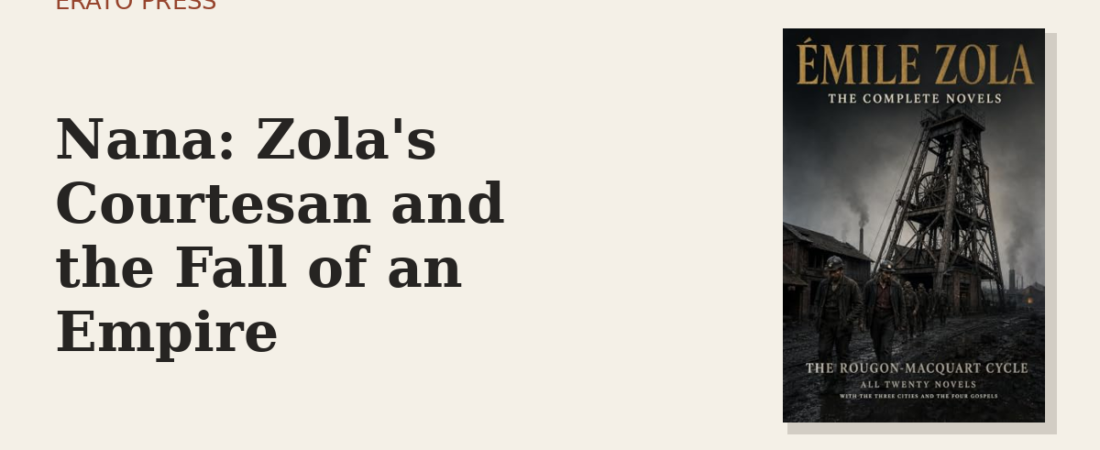
Set beside Germinal’s miners, it’s the same cycle’s other extreme: not the poor destroyed by the system, but the rich destroying themselves inside it.
Read Émile Zola: The Complete Novels →
Enjoyed this piece?
Get the next one — our essays on the classics and news of each new Erato Press edition — straight to your inbox.